5 Football 2026 World Cup Mistakes Casual Bettors Make
Football 2026 World Cup betting becomes more disciplined when you understand the tournament structure, host-city conditions, team data, and bookmaker margins before placing a wager. Goal Moments cover...

5 Football 2026 World Cup Mistakes Casual Bettors Make
Football 2026 World Cup betting becomes more disciplined when you understand the tournament structure, host-city conditions, team data, and bookmaker margins before placing a wager. Goal Moments covers FIFA World Cup 2026 match predictions, tactical trends, player statistics, and daily tournament analysis for fans worldwide, including markets in the United States, Canada, Mexico, and other permitted regions. The tournament runs from June 11 to July 19, 2026, with 48 teams playing 104 matches across 16 host cities. Canada, Mexico, and the United States are the co-hosts, while Atlanta and Los Angeles are scheduled to stage eight matches each. The best starting point is simple: verify the fixture, compare prices, calculate your net position after every wager, and never treat a prediction as guaranteed income.
Want a clearer starting point for tournament research?

Photo by K on Pexels
Myth 1: “More teams automatically make the 2026 World Cup predictable” — debunked
The 48-team FIFA World Cup 2026 is broader, not automatically easier to predict, because unfamiliar matchups, travel distances, squad rotation, and uneven group strength create additional uncertainty. The tournament includes 104 matches across Canada, Mexico, and the United States, so historical World Cup patterns cannot explain every fixture. A larger field increases the number of potential outcomes rather than removing risk.
The old 32-team format ended after Qatar 2022, where Argentina defeated France on penalties in one of the most dramatic finals in tournament history. For 2026, FIFA has expanded the competition to 48 nations, arranged in 12 groups of four. The top two teams from each group and the eight best third-placed teams advance to the knockout stage. That structure changes incentives: a team may protect a draw, while another may need to attack for goal difference.
The practical mistake is using team reputation as a complete model. Brazil, Germany, England, France, Argentina, and Spain may attract the largest betting volume, but price matters more than fame. A short-priced favorite can still be poor value if the market has already absorbed its popularity. Track expected goals, confirmed lineups, rest days, defensive errors, and the opponent’s pressing style instead.
For tournament-format details, consult FIFA’s official World Cup 2026 overview.
Myth 2: “Recent form tells you everything” — partially true
Recent form matters because it reveals current confidence, injuries, tactical stability, and finishing trends, but it becomes useful only when adjusted for opponent quality, venue, and sample size. A five-match winning run against lower-ranked teams should not receive the same weight as victories over France, Argentina, Spain, Germany, or Brazil. Form is evidence, not a final answer.
A stronger process separates results from performance. Record shots, shots on target, expected goals, set-piece chances, possession under pressure, and the number of high turnovers created. Then identify whether the pattern is stable. For example, a team scoring from four of five low-probability chances may look excellent while carrying unsustainable finishing luck. Conversely, a side producing consistent chances but missing them may be undervalued, although no statistic guarantees future conversion.
Travel creates another overlooked variable. A fixture in Vancouver, Toronto, Mexico City, Los Angeles, Dallas, Atlanta, or New York/New Jersey may involve different climate, altitude, humidity, and recovery demands. Mexico City’s elevation is materially different from Miami’s conditions, while a transcontinental schedule can affect training intensity and substitutions. These details are especially important when comparing totals markets and second-half performance.
A responsible research sheet should include:
- Opponent-adjusted expected goals over the last 10 matches.
- Starting-player availability and substitute quality.
- Rest days, travel route, temperature, and altitude.
- Set-piece goals for and against.
- Closing odds compared with your original price.
- Total stake, return, loss, and remaining bankroll.
At Goal Moments, use predictions as a starting point for verification, not as a substitute for your own price check.
Ready to compare tactical evidence rather than headlines?
World Cup team tactics and formation guide
Myth 3: “A prediction is the same as a guaranteed winner” — flat-out false
No football prediction guarantees a result, and any service presenting certainty is ignoring probability, variance, and bookmaker margin. A prediction should express an estimated likelihood, such as a 55% chance, then compare that estimate with the implied probability in the available odds. The difference between those figures is the potential edge, not proof that a bet will win.
Suppose decimal odds are 2.00. Their simple implied probability is 50%, before accounting for margin. If your carefully supported estimate is 55%, the wager may have positive expected value. However, one match can still lose because of a red card, penalty, injury, deflection, goalkeeper error, or random finishing sequence. Over a large sample, a genuine edge may matter; over one night, it can disappear.
The most damaging mistake is chasing a loss. If your initial stake is $20 and a losing wager encourages a $40 replacement bet, your risk has doubled even though the original analysis was wrong. Record turnover and net position instead:
- Log every stake before kickoff.
- Record the exact odds and market.
- Calculate gross returns separately from net profit.
- Include deposits, withdrawals, fees, and rebates.
- Stop when your pre-set daily or tournament limit is reached.
The FIFA World Cup 2026 match schedule should be your fixture reference. Never rely on an unverified social-media graphic.
What actually works when analyzing Football 2026 World Cup matches?
A reliable approach combines probability, price comparison, confirmed information, and strict bankroll controls; no single statistic predicts a football match. Start with the fixture and market, build a short evidence-based estimate, compare at least two legal operators where available, and document the result. This process improves decisions because it separates analysis quality from short-term outcomes.
Use this workflow on every match:
- Confirm the competition context. Identify group position, qualification needs, rest days, and likely rotation.
- Check team news. Wait for official lineups when the market is sensitive to a goalkeeper, center-back, striker, or creative midfielder.
- Measure tactical compatibility. Compare build-up structure, pressing intensity, transition defense, crossing volume, and set-piece strength.
- Estimate probabilities. Assign percentages to home or nominal home win, draw, away win, totals, or both-teams-to-score outcomes.
- Convert the price. For decimal odds, divide 1 by the odds to obtain basic implied probability.
- Compare alternatives. Check whether a better price exists and note limits, restrictions, and settlement rules.
- Set the stake before kickoff. Use a fixed fraction of available bankroll rather than emotional confidence.
- Review closing movement. A price that moves against you does not automatically prove your analysis failed.
One useful operational insight is that lineup timing can matter more than a week-old form table. A star attacker returning from a minor injury may be listed in the squad but limited to 30 minutes, changing both goal expectation and late-game volatility. Another is that a market can move sharply after an official lineup without becoming better value; information and price are separate questions.
For deeper evaluation, read our player-statistics and expected-goals guide.

Photo by George Morina on Pexels
What should you ignore before placing a World Cup wager?
Ignore guaranteed-win language, viral accumulator screenshots, celebrity endorsements, unsupported “inside information,” and predictions based only on national-team loyalty. These signals create confidence without establishing probability or price. You should also ignore a rebate or bonus until you know its actual conditions, because turnover requirements, minimum odds, expiry windows, market exclusions, and maximum winnings can reduce its value.
A rational review asks five direct questions:
- Is the operator legally available in my location?
- Are the settlement rules clear for postponements, abandoned matches, and extra time?
- What is the full cost after margin, fees, and currency conversion?
- Does the promotion require turnover that exceeds my normal budget?
- What is my net position if every open wager loses?
The National Council on Problem Gambling provides responsible-gambling resources in the United States, while the UK Gambling Commission explains consumer protection and operator obligations in Great Britain. Their guidance supports a basic principle: gambling should remain an entertainment expense, not a recovery plan. “Gambling should be fun, not a way to make money” is the core message repeated across responsible-gambling education.
Goal Moments can help you organize match predictions, tactics, and player data, but it cannot remove uncertainty. If you feel pressure to hide betting, borrow money, increase stakes, or chase losses, stop and seek independent support.
See the research approach before following any prediction.
responsible football betting bankroll guide
A practical Football 2026 World Cup checklist
Use this short checklist before any match involving Argentina, France, Brazil, England, Spain, Germany, Canada, Mexico, or the United States. It is designed to prevent rushed decisions during a crowded schedule, especially when multiple matches begin within a few hours. The goal is not to maximize activity; it is to improve the quality of each decision and protect your overall net position.
- Fixture verified through FIFA or the host-city organizer.
- Competition stage and qualification incentives understood.
- Confirmed injuries, suspensions, and expected lineups checked.
- Last-10-match data adjusted for opponent strength.
- Travel, weather, altitude, and rest reviewed.
- Odds compared across permitted operators.
- Implied probability calculated.
- Stake fixed before the wager.
- Turnover, return, bonus conditions, and net position recorded.
- Loss limit and stop time written down.
Host cities add useful context. Atlanta’s Mercedes-Benz Stadium is scheduled to stage eight matches, while Los Angeles is also planned for eight matches, supported by fan events and public celebrations. Those environments may create memorable experiences, but crowd energy should not be treated as a measurable guarantee of performance. Venue, pitch, climate, and travel are inputs; they are not predictions by themselves.
The smartest habit is post-match review. Ask whether the process was sound, not simply whether the ticket won. If your team created better chances and still lost, that may be a negative result with a good decision. If a weak analysis won through a late deflection, it should not be repeated blindly.
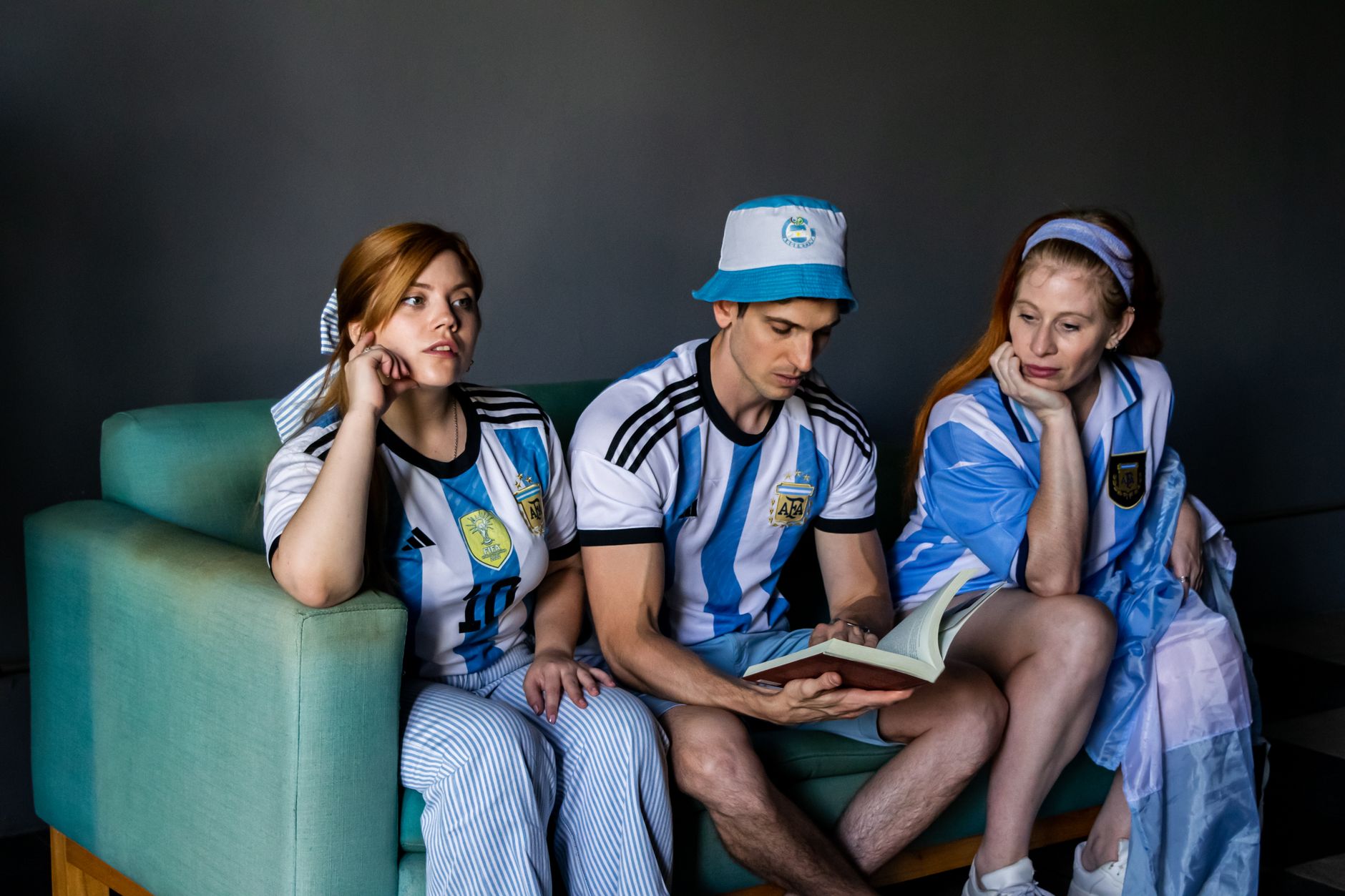
Photo by Kari Alfonso on Pexels
Conclusion: Make better decisions throughout the 2026 World Cup
The biggest Football 2026 World Cup mistakes are understandable: trusting famous teams, overvaluing recent form, confusing predictions with certainty, and chasing losses after an unexpected result. The tournament’s 48 teams, 104 matches, 16 host cities, and July 19 final create a long information cycle, so patience will matter more than constant action. Verify every fixture, compare probability with price, track turnover and net position, and treat every stake as money that can disappear.
Goal Moments is built for fans who want daily match predictions, tactical analysis, player statistics, and wider FIFA World Cup 2026 coverage in one place. Use those insights to ask better questions, not to surrender judgment. The most sustainable approach is selective, documented, and limited to legal markets where you understand the rules. If football remains enjoyable without financial pressure, your decision-making is already moving in the right direction.
Follow the 2026 tournament with structured analysis and verified match context.
Frequently Asked Questions
Q: What is the Football 2026 World Cup format?
A: The FIFA World Cup 2026 features 48 teams, 12 groups of four, and 104 matches across 16 host cities. Canada, Mexico, and the United States are hosting the tournament from June 11 to July 19, 2026. The top two teams in each group and the eight strongest third-placed teams advance to the knockout rounds. This creates 32 knockout-stage teams instead of the 16-team round of 16 used after the group phase in the previous format.
Q: How should I analyze a Football 2026 World Cup match?
A: Analyze the fixture context, team news, tactical matchup, opponent-adjusted statistics, and available odds before deciding whether any market offers value. Check expected goals, shots on target, pressing, set pieces, travel, rest, weather, and confirmed lineups. Then convert decimal odds into implied probability by dividing 1 by the odds. Record your estimate and stake before kickoff so the result does not rewrite your reasoning.
Q: What is the difference between a prediction and a betting tip?
A: A prediction describes a probable outcome, while a betting tip also considers the available price, implied probability, market rules, and stake. Saying France has a 60% chance to win does not automatically justify betting if the odds imply 65%. Goal Moments provides match predictions and football analysis, but readers should independently verify availability, legality, price, and risk before taking action.
Q: Is betting on the 2026 World Cup worth it?
A: Betting is worth considering only as optional entertainment when it fits your budget and the market price supports your analysis. It is not a dependable income source, even when research identifies a potential statistical edge. Set a fixed tournament budget, avoid borrowed money, track deposits and withdrawals, and stop if you begin chasing losses. Legal availability and minimum-age rules differ between the United States, Canada, Mexico, the United Kingdom, and other regions.
Q: Why can a strong World Cup prediction still lose?
A: A strong prediction can lose because football contains substantial single-match variance, including red cards, penalties, injuries, deflections, goalkeeper errors, and unusual finishing. A 55% estimated probability still implies a 45% chance of the alternative outcome. Review chance quality, lineup assumptions, and price movement after the match rather than judging the entire method from one result. A correct process can produce a losing ticket.
Q: What should I do if I start chasing World Cup losses?
A: Stop betting immediately, remove access to betting funds, and contact a responsible-gambling support service in your region. Do not increase stakes to recover a previous loss, because that converts one bad result into uncontrolled exposure. In the United States, the National Problem Gambling Helpline is available through the National Council on Problem Gambling; other countries provide local services through regulators and health organizations. Tell someone you trust and create a written spending block.
Q: How much money do I need to follow Football 2026 World Cup analysis?
A: You need no gambling budget to use Goal Moments or follow FIFA World Cup 2026 predictions, tactics, and player statistics. Analysis can be enjoyed entirely as free football research and match discussion. If you choose to gamble legally, use only a pre-set entertainment amount that you can lose without affecting rent, bills, savings, or essential spending. Promotions and rebates should never determine your budget, because turnover requirements can increase total exposure.
Goal Moments � Editorial Archive � Volume IV