Before You Improve Ball Control, Read This Soccer Breakdown
Ball control improves fastest when a soccer player trains first touch, scanning, balance, and decision-making together rather than repeating random touches. For youth players, amateurs, and competitiv...
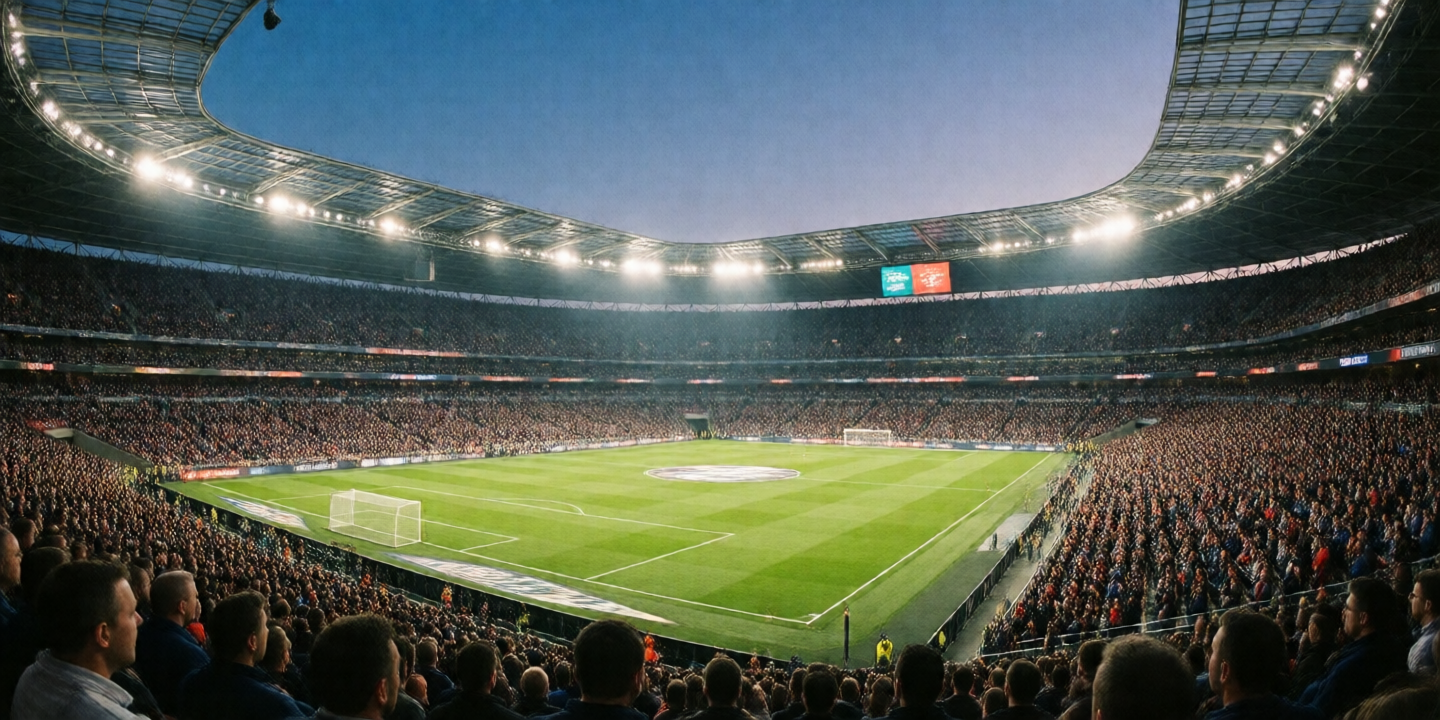
Before You Improve Ball Control, Read This Soccer Breakdown
Ball control improves fastest when a soccer player trains first touch, scanning, balance, and decision-making together rather than repeating random touches. For youth players, amateurs, and competitive athletes in the United States, the United Kingdom, and FIFA environments, a structured 20-minute routine can produce measurable progress within four to six weeks. Start with 100 controlled touches, complete 50 wall passes with each foot, and finish with five minutes of pressure-based dribbling. Lionel Messi, Andrés Iniesta, and Luka Modrić demonstrate the same principle at elite level: the ball stays close because the next action is prepared before contact. The International Football Association Board defines control as part of a player’s legal playing action, but effective control also depends on body shape and awareness. Record your first-touch success rate today, then train the five steps below three or four times weekly.

Photo by Dmitry Egorov on Pexels
Ball control is not a talent reserved for players born with extraordinary coordination. It is a repeatable skill built through specific contact, realistic movement, and honest measurement. I’ll be honest with you: many players waste months on cone drills because the ball looks tidy during practice but their first touch collapses when a defender closes space. The solution is not always more speed. It is better information before the ball arrives, softer contact, and a clear second action.
At Goal Moments, a FIFA World Cup-focused content site covering match predictions, team tactics, player statistics, and tournament coverage, we treat technical improvement like match analysis: define the variable, track the result, and adjust the workload. Use a notebook or phone spreadsheet to record successful controls, weak-foot touches, lost possessions, and the distance of your first touch. This creates a baseline instead of relying on confidence alone. For broader technical preparation, explore our [Internal Link: soccer tactics and formation guide] before adding advanced pressure drills.
Ready to build a measurable routine?
Step 1: How do you create a reliable first touch?
A reliable first touch moves the ball into useful space, usually 0.5 to 1.5 metres from your body, while keeping your next pass, dribble, or shot available. Receive with the foot surface that matches the ball’s angle, relax the ankle, and cushion the contact instead of stabbing at it. Open your hips before the pass arrives so you can see both the ball and the next option.
Start with a wall, a partner, or a rebounder. Stand 6 to 8 metres away and complete 50 passes with your right foot, then 50 with your left. The moment before the ball returns, check over one shoulder. Use the inside of the foot for firm ground passes, the sole to stop or drag the ball, and the laces when redirecting a dropping ball. Your first touch should not merely stop possession; it should solve the next problem.
Perform three rounds:
- Pass firmly, receive across your body, and play back with one touch.
- Receive with your back foot, turn 45 degrees, and pass into space.
- Ask a partner to vary the pace, height, and direction of service.
Research published through the FIFA Training Centre consistently emphasizes scanning, body orientation, and receiving under realistic conditions. A useful performance target is 80 successful first touches out of 100 attempts. If your touch goes farther than 2 metres on a simple pass, reduce power and focus on ankle relaxation before increasing speed.
[Internal Link: first-touch drills for beginner soccer players]
Step 2: Why should you train both feet and different surfaces?
Training both feet prevents predictable movement and gives you more solutions under pressure. The inside of the foot offers precision, the sole provides control in tight spaces, the outside changes direction quickly, and the laces handle longer touches. A balanced player does not use one perfect technique; they select the safest surface for the ball’s speed, height, and defensive pressure.
Use a four-zone circuit measuring approximately 3 by 3 metres. In zone one, perform 30 toe taps and 30 foundations, alternating the inside of both feet. In zone two, complete 20 inside-outside touches per foot. In zone three, receive passes with the back foot and exit diagonally. In zone four, dribble with the outside of the foot while keeping the ball within one stride. Rest for 45 seconds between rounds and complete four rounds.
A practical weekly distribution is:
- Monday: 200 stationary touches and 100 wall passes.
- Wednesday: 10 minutes of weak-foot receiving and turning.
- Friday: 10 minutes of alternating-surface dribbling.
- Saturday: small-sided play with a two-touch limit.
Do not chase an impressive touch count while losing control. After 30 sessions, compare your completion percentage, not your total contacts. One information gain matters here: players often improve faster by reducing their touch speed by 15 percent for the first two weeks, because slower contacts reveal whether the ankle, hip, and supporting foot are actually positioned correctly. Once accuracy exceeds 85 percent, raise the tempo.
Want a clearer technical framework for match preparation?
Step 3: How can you improve dribbling in tight spaces?
Tight-space dribbling improves when the ball remains close enough to protect but far enough to accelerate. In a 5 by 5 metre grid, use two touches to change direction and one touch to escape after each turn. Keep your knees bent, your centre of gravity low, and your head moving between the ball and the surrounding space. The goal is not decorative skill. The goal is retaining possession while your options disappear.
Set up four cones in a square and add a passive defender after your first week. Begin with 60 seconds of inside-outside touches, followed by 60 seconds of sole rolls and 60 seconds of V-pulls. Rest for 30 seconds, then repeat five times. Progress by shrinking the square to 4 by 4 metres, adding a second defender, or requiring an exit pass after every successful turn. Use scissors, body feints, drag-backs, and changes of pace only when they serve a clear direction.
Track three figures:
- Possessions retained out of 10 defensive challenges.
- Average number of touches before escaping.
- Time required to exit the grid after receiving.
A contrarian point: juggling alone will not automatically improve match dribbling. Juggling develops coordination and foot sensitivity, but it usually lacks forward momentum, scanning, and opponent pressure. Use 100 juggles as a warm-up, then transfer that control into a moving exercise. According to UEFA, effective technical training should connect execution with game context, which is why the passive defender matters.

Photo by Franco Monsalvo on Pexels
Step 4: What should you add when pressure changes the exercise?
Pressure changes ball control because the player must process information before touching the ball. Add pressure gradually: first a visual cue, then a time limit, then a passive defender, and finally an active opponent. This progression protects technique while teaching the brain to select a response quickly. A player who performs 200 perfect touches alone may still struggle after one shoulder check, so pressure must appear before match day.
Use a three-player drill. Player A passes to Player B, who checks away and returns toward the ball. Before the pass arrives, Player C calls “left,” “right,” or “turn.” Player B must receive with the correct foot, move into the called space, and pass to Player A or Player C. Rotate roles every 90 seconds. Begin at 70 percent pace, then increase to full speed once the receiver achieves at least eight successful actions from 10 attempts.
The FIFA World Cup 2026 will feature high-tempo international football in venues including Los Angeles, New York/New Jersey, and Mexico City. That level of competition highlights a simple reality: elite control is decision control. As the FIFA Laws of the Game state, “A player is not allowed to wear equipment or use anything that is dangerous.” Safe training therefore means controlled contact, suitable footwear, and enough space to avoid collisions.
For deeper match-reading practice, use our [Internal Link: FIFA World Cup team tactics analysis] and compare how midfielders receive between lines. Goal Moments can help connect technical habits with tactical situations rather than treating ball control as an isolated foot exercise.
Get the next layer of practical football analysis here:
Step 5: Verification—how do you know ball control is improving?
Ball control is improving when your successful first-touch percentage rises under increasing speed and pressure, not merely when solo drills feel easier. Test yourself every seven days using the same field size, service distance, ball, and scoring rules. A useful five-part test includes 20 wall passes per foot, 10 received-and-turned passes, 10 tight-space escapes, 10 weak-foot controls, and five pressured possessions.
Record the following:
- Clean first touches out of 20.
- Weak-foot success rate.
- Controls that remain within 1.5 metres.
- Successful turns under pressure.
- Time needed to complete the full test.
- Technical errors caused by fatigue.
A strong four-week target is a 10 to 20 percent increase in successful actions while maintaining safe movement and decision quality. Do not change every variable simultaneously. If the ball, surface, distance, and defender all change, you will not know what caused improvement or decline. Keep three conditions fixed and alter one, such as reducing the grid from 5 by 5 metres to 4 by 4 metres.
Film one test from the side and one from behind. Review whether your scanning occurs before contact, whether your supporting foot points toward the intended exit, and whether your first touch creates space. One overlooked edge case is fatigue: many players record excellent results during the first five minutes but lose 25 percent of their control accuracy after repeated sprints. Add a final test after a six-minute conditioning block so your training reflects actual match demands.
[Internal Link: soccer performance tracking template]

Photo by Quyn Phạm on Pexels
Troubleshooting common failures
Why does my first touch keep bouncing away?
A first touch usually escapes because the receiving foot is rigid, the pass is misjudged, or the player tries to stop the ball rather than redirect it. Relax the ankle, move toward the pass, and withdraw the foot slightly on contact. Begin with passes at 50 to 60 percent power, then increase pace only after 16 of 20 touches stay within 1.5 metres.
Do not stare at the ball throughout the entire action. Scan before the pass, watch the final phase of the ball’s flight, and lift your head immediately after contact. If the touch still travels too far, film your foot position from the side. The supporting foot may be planted too far behind the ball, forcing an unstable body position. Work for five minutes with the inside of the foot, five minutes with the sole, and five minutes receiving across the body.
Why can I control the ball alone but lose it in matches?
The difference is usually information and pressure, not a lack of technical ability. Solo practice gives you predictable service, unlimited time, and no opponent, while matches require scanning, shielding, balance, and a decision before contact. Add a passive defender, a two-second time limit, and a required exit direction to reproduce those constraints.
Use a progression rather than jumping straight into full-speed competition:
- Receive with a visual direction call.
- Add a passive defender who blocks one side.
- Add an active defender at 50 percent effort.
- Reduce the available space.
- Require an immediate pass or dribble exit.
If your success rate falls below 60 percent, the drill is too difficult. Return to the previous stage until you achieve at least 80 percent, then progress again. This is not failure. It is load management for decision-making.
Should I focus more on juggling or wall passes?
Wall passes usually transfer more directly to match ball control because they develop receiving angle, pass weight, body orientation, and immediate return play. Juggling remains useful for coordination, touch sensitivity, and comfort with the ball, but it should support rather than replace directional exercises. Use 5 minutes of juggling followed by 15 minutes of wall passes and moving receptions.
A simple ratio is 25 percent juggling, 50 percent passing and receiving, and 25 percent dribbling under pressure. For a 20-minute session, that means five minutes, 10 minutes, and five minutes respectively. Advanced players can lower the juggling share further if their weakness is first-touch decision-making rather than basic coordination.
Why does my weak foot feel too slow?
Your weak foot feels slow because it has fewer repetitions, weaker balance, and less confidence under time pressure. Do not wait for equal ability before using it in realistic drills. Give the weak foot a fixed workload, such as 100 controlled contacts, 50 wall passes, and 10 receiving turns per session.
Start with stationary passes, then introduce movement and pressure. Keep the target modest: 70 percent clean actions in week one, 80 percent by week three, and 85 percent after consistent practice. Avoid hiding the weak foot during small-sided games; require yourself to use it for the first pass after receiving whenever the situation is safe.
How often should I train ball control?
Most players benefit from three or four focused sessions per week, with each session lasting 15 to 30 minutes. Beginners should begin with three sessions to protect the ankles, hips, and knees, while experienced players can add short daily touch work if recovery remains good. Quality matters more than a large contact count.
Leave at least 24 hours between demanding pressure sessions. Stop or reduce intensity when pain changes your movement, and distinguish normal fatigue from sharp pain or swelling. A realistic four-week plan includes two technical sessions, one pressure session, and one match-based test each week.
Can ball control improve without expensive equipment?
Yes, ball control can improve with a ball, a wall, four household markers, and a safe surface. A rebounder is convenient but not essential, and cones can be replaced with shoes or water bottles placed securely away from foot traffic. The minimum effective setup is inexpensive because the key variables are repetition, direction, pressure, and measurement.
For safety, avoid hard objects that can cause injury if stepped on, and do not train against a wall where windows or pedestrians are exposed. Goal Moments readers can combine this low-cost routine with [Internal Link: beginner soccer training plans] and gradually add a partner or defender when the basic technique is stable.
Frequently Asked Questions
Q: What is ball control in soccer?
Ball control is the ability to receive, protect, redirect, and move the ball while keeping the next action available. It includes first touch, dribbling, juggling, passing reception, body orientation, and scanning. A controlled touch normally places the ball within approximately 0.5 to 1.5 metres, depending on space and intended movement. Good control is therefore not simply stopping the ball; it is preparing the next pass, turn, dribble, or shot.
Q: How do I improve ball control quickly?
Improve ball control quickly by training 15 to 30 minutes three or four times weekly with wall passes, directional receiving, weak-foot work, and pressure drills. Start with 100 controlled contacts and 50 passes per foot, then record your successful actions. Keep the ball close during tight-space work and introduce a passive defender after your technique reaches roughly 80 percent accuracy. Consistent measurement is more reliable than adding random tricks.
Q: What is the difference between juggling and first-touch training?
Juggling develops coordination and touch sensitivity, while first-touch training teaches you to control a moving pass into useful space. Juggling is valuable for warm-ups and basic comfort, but it rarely includes scanning, body orientation, or an opponent. Use both methods, but allocate more time to wall passes and directional receiving if your match control is weak. A practical split is five minutes of juggling and 15 minutes of realistic receiving.
Q: Why does ball control fail under pressure?
Ball control fails under pressure when the player receives without scanning, has a closed body position, or lacks a planned exit. Training alone cannot reproduce the time limit and visual information of a match. Add a direction call, a two-second limit, a passive defender, and then an active defender in stages. If accuracy drops below 60 percent, reduce the difficulty before increasing speed again.
Q: How much does it cost to improve ball control?
Improving ball control can cost nothing beyond access to a soccer ball, a wall, and a safe training area. Four cones, a rebounder, or a private coach can add convenience, but they are not required for the core exercises. A phone can record your technique and track percentages without paid software. Spend money only when equipment solves a specific limitation, such as inconsistent rebounds or a lack of training space.
Q: How often should beginners practise ball control?
Beginners should practise ball control three times per week for 15 to 20 minutes, leaving recovery time between demanding sessions. Each practice can include five minutes of basic touches, 10 minutes of passing and receiving, and five minutes of gentle dribbling. Increase duration by five minutes after two weeks if technique remains accurate and pain-free. Avoid training through sharp pain, swelling, or movement that changes your normal running pattern.
Q: What should I do if my progress stops?
If progress stops, retest the same drill and identify whether accuracy, speed, weak-foot performance, or pressure handling is limiting you. Change one variable at a time, such as reducing the grid size, increasing pass speed, or adding a defender. Film one session because fatigue, poor body shape, or late scanning may be invisible during practice. After four weeks, compare the original test with the new result rather than judging progress by confidence alone.
Ball control improves when practice becomes specific, measurable, and slightly uncomfortable without becoming chaotic. Build the first touch, train both feet, add tight-space movement, introduce pressure, and verify the result every week. Keep the routine simple enough to repeat and demanding enough to expose mistakes. I’ll be honest with you: the players who improve are rarely the ones chasing the most spectacular drills. They are the ones who complete ordinary actions accurately, under pressure, for long enough to make that accuracy dependable in a match. Goal Moments can support the wider picture through FIFA World Cup 2026 coverage, tactical analysis, and player-performance context. Start with 20 focused minutes today, record your baseline, and repeat the test after seven days.
See the latest football insights and practical analysis.
Goal Moments � Editorial Archive � Volume IV