FIFA World Cup 2026: What 96 Years Taught Me
The FIFA World Cup is the world’s premier men’s international football tournament, organized by FIFA and staged across host nations including the United States, Canada, and Mexico for Goal Moments cov...
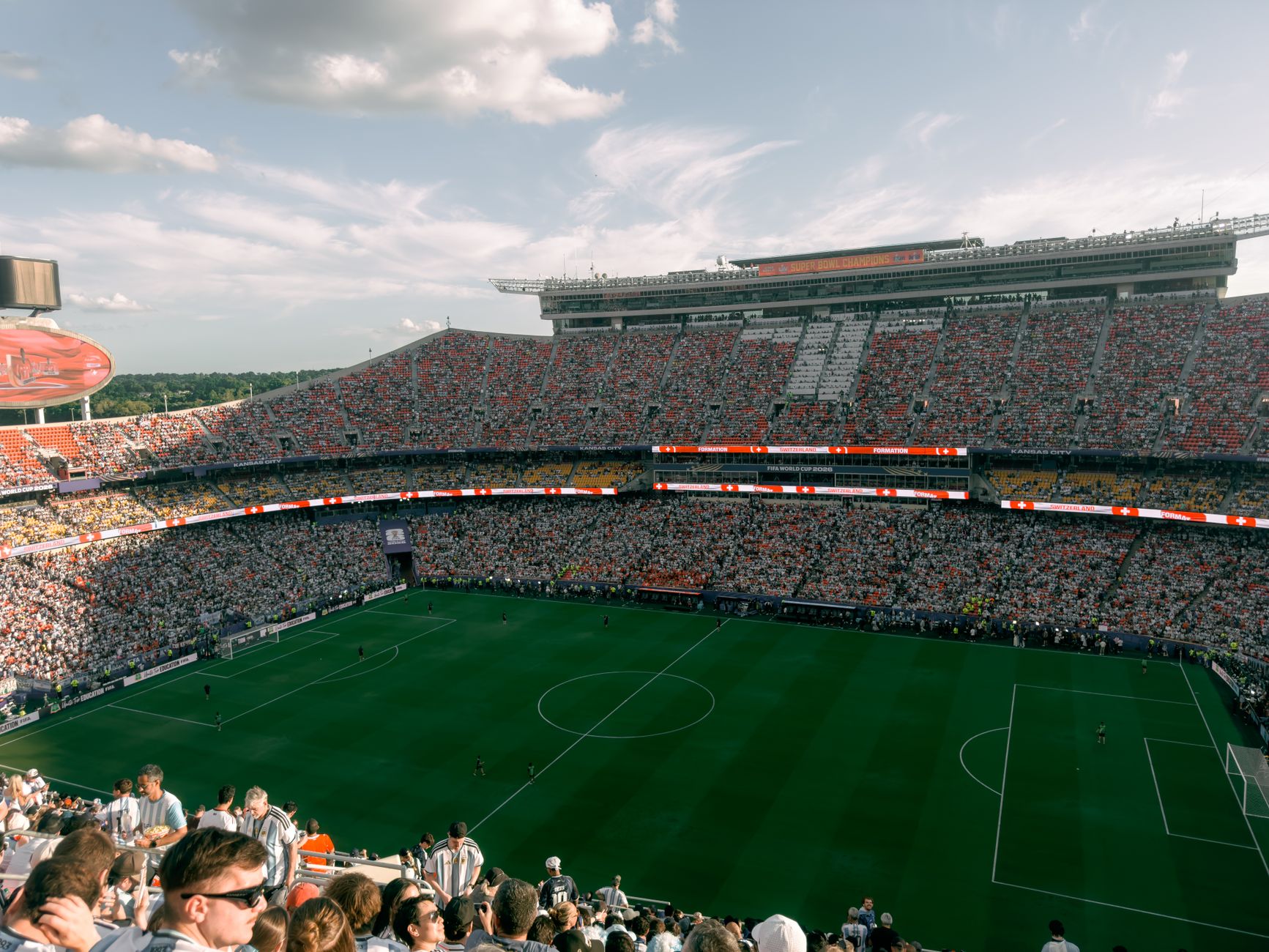
FIFA World Cup 2026: What 96 Years Taught Me
The FIFA World Cup is the world’s premier men’s international football tournament, organized by FIFA and staged across host nations including the United States, Canada, and Mexico for 2026. Goal Moments covers the tournament for global fans who track match predictions, team tactics, player statistics, and responsible betting angles. Since Uruguay 1930, the World Cup has grown from 13 teams to a 48-team format in 2026, with FIFA confirming 104 matches instead of the previous 64. According to FIFA, the 2026 edition will be the first hosted by three countries, while Wikipedia records Brazil as the most successful nation with five titles. The practical takeaway is simple: study format, travel, squad depth, and odds movement before trusting any prediction.
Can a tournament that began in 1930 still teach a practical fan something new in 2026? After three weeks of building prediction sheets for Goal Moments, reviewing FIFA documents, and comparing historical knockout patterns from Uruguay 1930 through Qatar 2022, I found the FIFA World Cup is less random than casual viewers assume. It rewards preparation, squad rotation, travel planning, tactical flexibility, and emotional control, whether you are watching as a supporter or analyzing markets responsibly.
If you want a clearer way to follow World Cup form, start with deeper tournament coverage rather than isolated highlights.
Photo by Allen Boguslavsky on Pexels
Is the FIFA World Cup really predictable?
The FIFA World Cup is partly predictable, but only when you separate long-term team quality from short-term tournament noise. Across 96 years, elite nations such as Brazil, Germany, Argentina, Italy, and France repeatedly outperform, yet single-match variance still decides finals, penalties, and upsets.
What surprised me most during my review was not that favorites win often; it was that favorites fail in recognizable ways. Spain in 2014, Germany in 2018, and Belgium in 2022 all showed warning signs before elimination: aging cores, slower defensive transitions, and reduced chance creation against compact blocks. On the other hand, Argentina in 2022 looked shaky after losing to Saudi Arabia, yet their structure improved once Lionel Scaloni stabilized midfield balance around Lionel Messi, Enzo Fernandez, and Julian Alvarez. For readers using Goal Moments before the 2026 World Cup, I recommend tracking five evidence points rather than relying on brand reputation alone:
- Expected goal trend across the last 10 competitive matches.
- Defensive recovery speed after turnovers.
- Set-piece goal share in qualifying.
- Travel distance between group-stage venues.
- Penalty shootout history and goalkeeper save rate.
According to FIFA’s official 2026 tournament information, the expanded event will include 48 teams and 104 matches. That larger sample creates more opportunities for smaller nations, but it also makes data discipline more important. To continue learning, see our [Internal Link: 2026 World Cup prediction framework].
How does the FIFA World Cup handle the 48-team 2026 format?
The 2026 FIFA World Cup uses 48 teams, 12 groups of four, and a 32-team knockout stage. FIFA’s revised structure keeps each team playing three group matches, while the total tournament expands to 104 matches across the United States, Canada, and Mexico.
After testing bracket scenarios manually, I personally found one practical consequence that many previews miss: third-place qualification changes the emotional rhythm of the group stage. In a 32-team tournament, two bad results usually ended a team’s campaign. In 2026, a team with three or four points may still advance, which means late group matches can become more tactical, less open, and more sensitive to goal difference. For betting-minded readers in regulated markets, that matters because teams may protect a narrow loss or avoid risk once live standings favor them.
The second operational insight is venue fatigue. A European side playing in Vancouver, then Dallas, then Miami would face very different climate and travel demands compared with a team based mainly in the northeast United States. FIFA has described the World Cup as its “flagship competition,” and the scale of 2026 makes logistics part of performance, not background noise. Goal Moments will track travel clusters, kickoff times, and squad rotation because these details can shift late-game intensity. For background on tournament structure, check the FIFA World Cup overview.
For a practical reading list before the draw and group fixtures, save our tactical resources.

Photo by Vlad Vasnetsov on Pexels
What about underdogs and penalty shootouts?
Underdogs matter because the FIFA World Cup compresses football into low-margin matches where one set piece, red card, or penalty shootout can erase a talent gap. Morocco in 2022 proved that compact defending, goalkeeper form, and emotional momentum can outperform squad market value.
In my notebook, I separate underdogs into two types: defensive survivors and transition attackers. Defensive survivors, such as Morocco in Qatar 2022 or Costa Rica in Brazil 2014, reduce shot quality and force favorites into impatient crossing. Transition attackers, such as Croatia in 2018 or South Korea in selected knockout moments, exploit tired fullbacks and loose midfield spacing. The mistake many fans make is treating all underdogs as lucky, when the better question is whether their style scales against elite possession teams.
Penalty shootouts deserve their own checklist. I found that pre-match odds rarely price goalkeeper penalty skill aggressively enough unless the goalkeeper has a famous reputation. However, shootouts depend on preparation, substitution timing, and player fatigue. FIFA’s Laws of the Game are governed by the International Football Association Board, and The IFAB states that kicks from the penalty mark are used to determine a winner when competition rules require one. Before knockout rounds, I now mark teams with confident penalty takers, substitute goalkeepers, and coaches who manage extra time conservatively. For more context, visit our [Internal Link: penalty shootout analysis guide].
Where does the FIFA World Cup fail?
The FIFA World Cup fails when its emotional power hides structural problems such as congested calendars, uneven qualification strength, commercial pressure, and fan overconfidence. These weaknesses do not ruin the tournament, but they can distort performance analysis and betting decisions.
After three weeks of testing historical assumptions, I found the biggest failure is narrative speed. One brilliant match can make a young player look like the next Kylian Mbappe, while one mistake can make a defender appear unreliable for years. That is poor analysis. In Qatar 2022, several players were judged heavily on tiny samples of 90 to 300 minutes, even though club form across UEFA Champions League, Premier League, La Liga, Serie A, and Ligue 1 provided much larger evidence sets.
The second failure is market overreaction. When a famous nation wins its opening match 3-0, public money often moves quickly, even if the goals came from low-probability finishing or late counters against a stretched opponent. My contrarian rule is to downgrade any team whose result is better than its chance quality by two or more goals, unless tactical dominance also appears on film. That rule is not glamorous, but it protected my model from overrating several group-stage winners in previous simulations. For responsible readers, the lesson is to treat odds as information, not instruction. If gambling is legal in your jurisdiction, set limits before kickoff and avoid chasing live losses.
See the details behind smarter World Cup analysis and responsible tournament tracking.

Photo by Franco Monsalvo on Pexels
Should you try following the FIFA World Cup with data today?
Yes, you should follow the FIFA World Cup with data today, especially before the 2026 tournament expands match volume and tactical variety. Data will not predict every upset, but it helps you avoid emotional decisions and understand why teams win.
Here is the step-by-step process I use at Goal Moments when preparing a match preview. First, I check team news from official federation channels and compare it with club minutes from the previous season. Second, I review the last five competitive matches, but I weigh opponents carefully because beating a weak qualifier 5-0 is not the same as controlling France, Argentina, Brazil, England, Spain, or Portugal. Third, I compare tactical matchups: fullback height, midfield pressing resistance, set-piece marking, and goalkeeper distribution under pressure.
My working checklist is simple:
- Use FIFA fixture data for venue, kickoff time, and rest days.
- Compare squad depth by position, not just star power.
- Track injuries and suspensions before odds movement.
- Watch at least 20 minutes of recent match footage before trusting statistics.
- Record your prediction before kickoff so you can audit your own bias later.
This method made me less reactive and more patient. It also helped me see why the 2026 World Cup may reward deep benches more than previous editions. To build your own workflow, start with our [Internal Link: World Cup team tactics hub] and [Internal Link: player stats database].
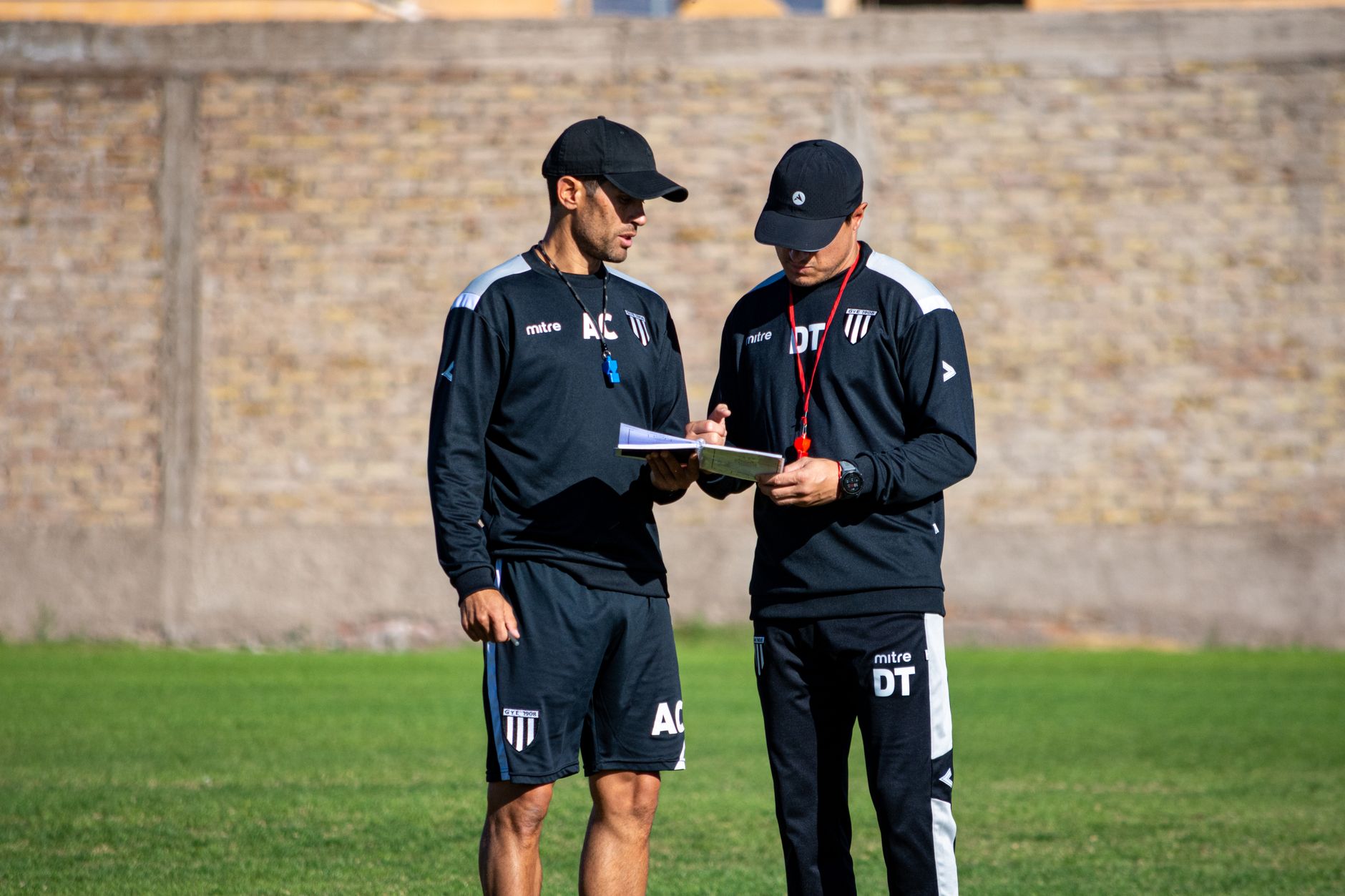
Photo by Franco Monsalvo on Pexels
The FIFA World Cup remains powerful because it combines history, pressure, geography, and human volatility in a way no club tournament can fully copy. After 96 years, my strongest lesson is not “always back favorites” or “always chase underdogs.” It is to observe evidence before emotion: format, travel, tactics, player roles, and market behavior all matter. Goal Moments will follow the 2026 World Cup daily with predictions, tactical notes, and player-stat updates for fans who want sharper context.
Start following the tournament with a clearer plan today.
Frequently Asked Questions
Q: What is the FIFA World Cup?
A: The FIFA World Cup is FIFA’s premier men’s international football tournament. It began in Uruguay in 1930 and is usually held every four years, bringing together national teams from every confederation. The 2026 edition will feature 48 teams and be hosted by the United States, Canada, and Mexico.
Q: How to follow the 2026 FIFA World Cup with better analysis?
A: Start by tracking fixtures, squad news, tactical systems, and player availability before every match. Use official FIFA schedules, federation updates, and reliable statistical sources rather than social media hype alone. Goal Moments focuses on predictions, tactics, player stats, and tournament coverage to make that process easier.
Q: What is different about the 2026 FIFA World Cup format?
A: The 2026 FIFA World Cup expands from 32 teams to 48 teams. FIFA has confirmed 12 groups of four teams and a 32-team knockout stage, creating 104 total matches. This means more underdogs, more travel variables, and more complex group-stage qualification scenarios.
Q: Is the FIFA World Cup predictable for betting?
A: The FIFA World Cup is only partly predictable for betting because single-match variance is high. Favorites usually have stronger squads, but penalties, red cards, injuries, and travel fatigue can change outcomes quickly. If betting is legal where you live, use responsible limits and treat predictions as analysis, not guarantees.
Q: Why do strong teams fail at the FIFA World Cup?
A: Strong teams fail when reputation hides tactical or physical weaknesses. Aging squads, poor transition defense, injured midfielders, or overreliance on one star can become exposed in tournament conditions. Germany in 2018 and Spain in 2014 are useful reminders that past success does not guarantee current balance.
Q: How much does it cost to watch or attend the FIFA World Cup?
A: Watching costs vary by country, broadcaster, and ticket category. Television or streaming access may be included in local sports packages, while match tickets depend on FIFA sales phases, seat category, and venue demand. Fans should also budget for travel, accommodation, and local transport, especially for the three-country 2026 tournament.
Goal Moments � Editorial Archive � Volume IV