10 Football Drills Compared: Faster Skills
Improving football skills requires deliberate repetition, realistic pressure, and measurable progress rather than random practice. This guide covers 10 drills for first touch, passing, dribbling, shoo...

10 Football Drills Compared: Faster Skills
Improving football skills requires deliberate repetition, realistic pressure, and measurable progress rather than random practice. This guide covers 10 drills for first touch, passing, dribbling, shooting, defending, agility, and scanning, using a football, cones, a wall, and one training partner. Strong gains can come from 20–30-minute sessions performed three or four times weekly rather than exhausting five-hour routines. Lionel Messi’s reported two daily sessions are inspiring, but most players need a sustainable plan. Track successful touches, weak-foot passes, sprint times, and shots on target. Start with your biggest match weakness, then increase speed only after technique remains controlled.

Photo by Franco Monsalvo on Pexels
Is improving football skills really about training harder?
Improving football skills is primarily about training with purpose, feedback, and consistency, not simply increasing session length. A focused 25-minute drill block can produce better transfer than an unfocused two-hour session because every repetition has a defined technical target. The Fédération Internationale de Football Association regularly emphasizes technique, perception, and decision-making as connected parts of football development.
Many players practise what they already do well because it feels comfortable. That creates confidence, but not a complete game. Review your last three matches and record recurring problems: losing possession under pressure, receiving with the wrong foot, missing open passes, or arriving late to tackles. Then assign one primary weakness to each training day.
A useful weekly structure looks like this:
- Monday: first touch and passing accuracy.
- Wednesday: dribbling, acceleration, and changes of direction.
- Friday: shooting and finishing under pressure.
- Saturday or Sunday: small-sided game with one measurable objective.
Keep a simple training ledger. Write down the number of accurate wall passes in 60 seconds, completed weak-foot touches, shots on target from 20 attempts, and the time required to complete a cone circuit. If your accuracy falls below 80% when speed increases, reduce the pace. Technique must survive fatigue and pressure before the drill is truly improving your football skills.
Drill 1: Wall passing and first-touch control
Find a solid wall and stand 5–8 metres away. Pass with your right foot, receive across your body with the left, and repeat from both sides. Use the inside of the foot for control, then progress to one-touch passing. After 30 controlled passes, add a firm pass that rebounds unpredictably. Open your body before the ball arrives and check your shoulder during the rebound, even though no defender is present.
This drill develops passing weight, receiving technique, balance, and visual awareness. Add aerial control by chipping the ball into the wall and cushioning the rebound with your chest, thigh, or instep. Do not simply stop the ball beneath your foot; direct it into the next useful space. Complete three rounds of 60 seconds, resting 30 seconds between rounds.
A practical benchmark is 45 accurate one-touch passes in 60 seconds from 6 metres. Beginners should target 25–30. The important measurement is not speed alone. Count passes that are both accurate and playable for a teammate. That distinction separates neat practice from match-ready technique.
Drill 2: Irregular cone dribbling
Place 8–12 cones across a 12-by-18-metre area at uneven distances and angles. Dribble through the space using both feet, changing direction whenever a cone blocks your route. Keep your head up every two or three touches and use the outside, inside, sole, and laces of the foot. Complete four 45-second rounds with 45 seconds of recovery.
Regular cone lines teach predictable footwork. Irregular cones add perception and decision-making, which is closer to a real match. Do not memorise a route. Look, choose, accelerate, and adapt. If you repeatedly touch the cones, widen the spacing by 50 centimetres. If the circuit feels effortless, reduce the space or ask a partner to call a colour or direction that you must immediately follow.
A useful progression is to place one “exit gate” at each side of the area. After passing the final cone, explode through the nearest gate for 3–5 metres. This links close control to the first acceleration after beating an opponent. Record completed circuits rather than raw speed, because a fast player who loses the ball has not improved effective dribbling.
beginner football ball-control drills
How does football training handle pressure and realistic decisions?
Football training handles pressure effectively when drills add time limits, passive defenders, changing cues, and consequences for poor decisions. Technical repetition should begin without pressure, then progress toward opposition and uncertainty. A player who can complete 100 passes alone may still struggle when a defender closes at full speed; realistic progression closes that gap.
Drill 3: One-on-one shielding and dribbling
Use a 10-by-12-metre channel with a teammate acting as a passive defender first. Receive the ball with your body between the defender and the ball, take the first touch away from pressure, and protect possession for 5 seconds before dribbling through an exit gate. Progress to live defending, where the attacker scores by crossing the gate and the defender scores by winning the ball.
Practise three receiving positions: with the defender behind you, at your side, and approaching from the front. Each position requires a different solution. Shield with your arm legally, bend your knees, keep the ball on the far foot, and use your body to disguise the next movement. The goal is not to perform a spectacular trick every time. Often, the correct action is a secure turn, a pass back, or a controlled carry into space.
Complete 10 repetitions on each foot. Give the attacker two points for escaping cleanly and one point for retaining possession under pressure. This scoring system rewards intelligent choices, not unnecessary risk. It also creates evidence you can compare across sessions.
Drill 4: Passing triangles with scanning
Set three cones in a triangle, 8–10 metres apart, with one player at each cone. Pass, move to the next cone, and scan over both shoulders before receiving. The receiving player should call the name of the next target or identify a colour held behind them by a coach. This forces the head to move before the ball arrives.
After five minutes, limit each player to two touches. Then add a defender in the centre who can intercept passes. The receiver must decide whether to play forward, bounce the ball back, or protect it. According to UEFA Training Ground, effective technical practice should connect ball actions with game situations rather than isolate movement from decision-making.
The most overlooked detail is the quality of the first touch. A touch that travels 1 metre forward may be excellent if it escapes pressure; the same touch may be poor if a defender occupies that space. Measure whether the first touch creates a passing lane. This is a more useful statistic than counting touches alone.
Drill 5: Four-corner passing under a time limit
Mark a 15-by-15-metre square with one player at each corner and two balls in play. Players pass diagonally or along the line, follow their pass, and communicate before receiving. Begin with unlimited touches, then use two touches, then one touch when appropriate. Add a 90-second target: complete as many accurate passes as possible without a misplaced ball.
This drill combines passing weight, movement, communication, and awareness. If the ball arrives behind the receiver, the passer must correct the angle rather than blaming the teammate. If the receiver cannot play forward, they should secure possession and reset. These details matter because the International Football Association Board Laws of the Game reward legal play but do not rescue poor decisions.
Information gain matters here: players may improve more by reducing the passing distance from 15 metres to 10 metres than by repeating failed 15-metre passes. Once accuracy reaches 85%, increasing distance can become productive. Before that point, the longer pass only reinforced poor mechanics.
Want a deeper football analysis routine? Use Goal Moments for daily 2026 World Cup match predictions, tactical breakdowns, and player-stat context.
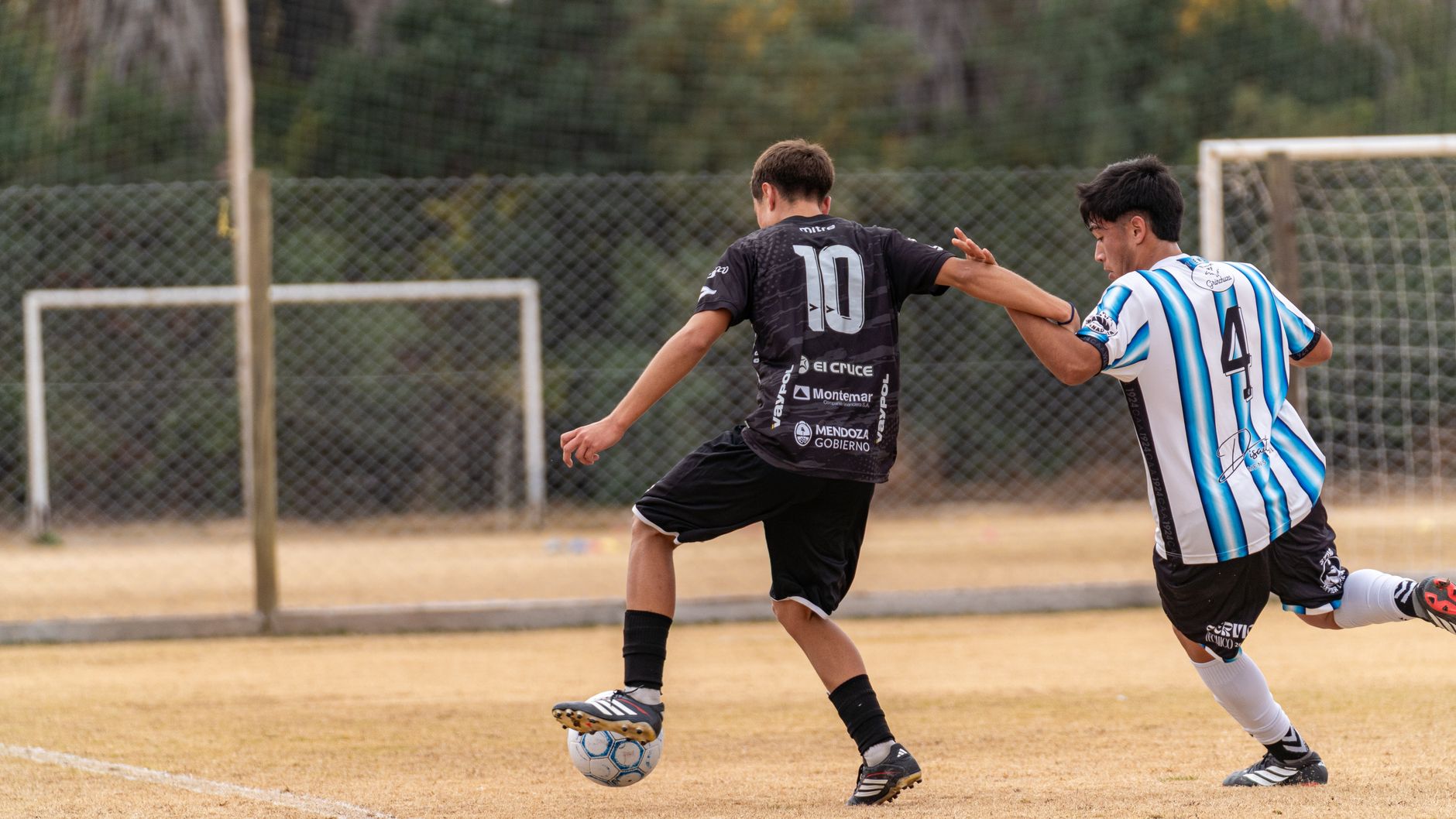
Photo by Franco Monsalvo on Pexels
What about weak feet, limited space, and solo practice?
Weak-foot development, small training spaces, and solo practice are not barriers to improving football skills. They require smaller targets, slower progression, and more deliberate repetition. A 3-by-3-metre area, a wall, and one ball can train useful control, passing, turning, and coordination without a full pitch or expensive equipment.
Drill 6: Weak-foot touch ladder
Use your weaker foot for 20 inside touches, 20 outside touches, 20 sole rolls, 20 pull-push movements, and 20 V-cuts. Rest for 30 seconds and repeat three times. Keep the ball within one step and maintain a balanced posture. When you can complete the sequence without looking down constantly, add a forward movement of 5 metres.
Do not expect both feet to become identical quickly. The first target is functional reliability: controlling a pass, making a short pass, and finishing a simple chance with the weaker foot. A practical six-week target is 300–500 weak-foot contacts per week, divided across three or four sessions. More is not automatically better if the ankle becomes sore or technique deteriorates.
One useful contrarian rule is to begin some sessions with the weak foot, not the strong foot. Starting fresh improves concentration and prevents the weaker side from receiving only tired, careless repetitions. Finish with the strong foot if you need confidence, but allocate your best attention to the technical gap.
Drill 7: Tight-space four-square control
Mark a 2-by-2-metre square and work through four movements: receive and stop, receive and turn, receive across the body, and receive away from an imagined defender. Use a wall or partner to deliver passes from different angles. The ball should never escape more than 1 metre unless the exercise specifically trains acceleration.
This drill is ideal for apartments with safe flooring, small gardens, or narrow outdoor spaces. Use a low-bounce ball indoors only if the surface and surroundings are suitable. Perform 5 rounds of 90 seconds, with 30 seconds of rest. Change the receiving surface every round: inside foot, outside foot, sole, thigh, and chest where space allows.
The key edge case is fatigue. Players often practise first touch while fresh, then lose control late in matches. Add the drill after a short shuttle sequence: six 10-metre accelerations with 20 seconds of recovery. If first-touch accuracy drops below 70%, stop the fatigue progression and rebuild control. Tired repetition can train the wrong movement pattern.
Drill 8: Solo wall-volley sequence
Stand 4–6 metres from a wall and strike the ball with the laces, inside foot, thigh, chest, and head in separate sequences. Start with a controlled rebound, then alternate surfaces: right-foot pass, left-foot pass, thigh control, chest control, and volley. Keep the ball below head height unless you have enough safe space and proper supervision.
This develops coordination and high-ball confidence. For chest control, soften the contact by moving slightly backward; for thigh control, lift the leg to meet the ball and withdraw it on impact. Do not trap a high ball stiffly. Complete 5 sequences of 10 contacts, then record how many rebounds remain within your playable zone.
A wall cannot imitate every match situation, but it provides immediate feedback. A poor contact returns at an awkward angle, and that consequence appears instantly. For an advanced variation, call the receiving surface before the rebound arrives. This adds perception and reduces the habit of planning every touch in advance.
advanced first-touch and passing techniques
Where does football skills training fail?
Football skills training fails when players chase volume, practise unrealistic patterns, ignore recovery, or measure only appearance rather than outcomes. Cones cannot replace opponents, isolated shooting cannot replace shot selection, and a perfect training environment cannot guarantee match performance. The solution is progressive resistance: technique first, then speed, scanning, pressure, and competition.
Drill 9: Finishing from different angles
Create three shooting stations: central edge of the penalty area, right channel, and left channel. Receive a pass, take one preparation touch, and finish with the laces or inside of the foot. Complete 6 shots from each station with the right foot and 6 with the left. Mark the target zones before starting: low far corner, low near corner, and controlled finish across the goalkeeper.
Do not measure success only by spectacular goals. Record shots on target, correct body shape, and whether the preparation touch set up the finish. A shot that misses narrowly after poor balance is different from a shot that misses because the target was unrealistic. Research from The FA supports structured practice that connects technical execution with decision-making and game context.
Add a defender or goalkeeper after the basic round. The defender can apply pressure without tackling, then progress to live pressure. Give the attacker 3 seconds from first touch to shot. This constraint improves speed of thought while preserving a technical focus.
Drill 10: Defending jockey and recovery sprint
Set a 12-by-8-metre channel. The defender begins 4 metres from the attacker, approaches under control, lowers their centre of gravity, and guides the attacker toward one side. Do not dive in. The attacker attempts to cross an end line; after the action, the defender sprints 10 metres to simulate recovery.
Good defending is not just tackling. It involves distance, body angle, patience, acceleration, and communication. Keep the front foot active, avoid crossing your feet, and watch the attacker’s hips rather than the ball alone. Complete 8 repetitions, switching roles after every two attempts. Rest for 45–60 seconds so that technique does not collapse.
A useful observation is that many defenders may improve when the channel becomes narrower, not wider. A narrow channel can reduce excessive side-to-side movement and encourage better body orientation. Begin at 8 metres, reduce to 6 metres after three successful defensive stops, and increase the space only when the attacker is no longer challenged.
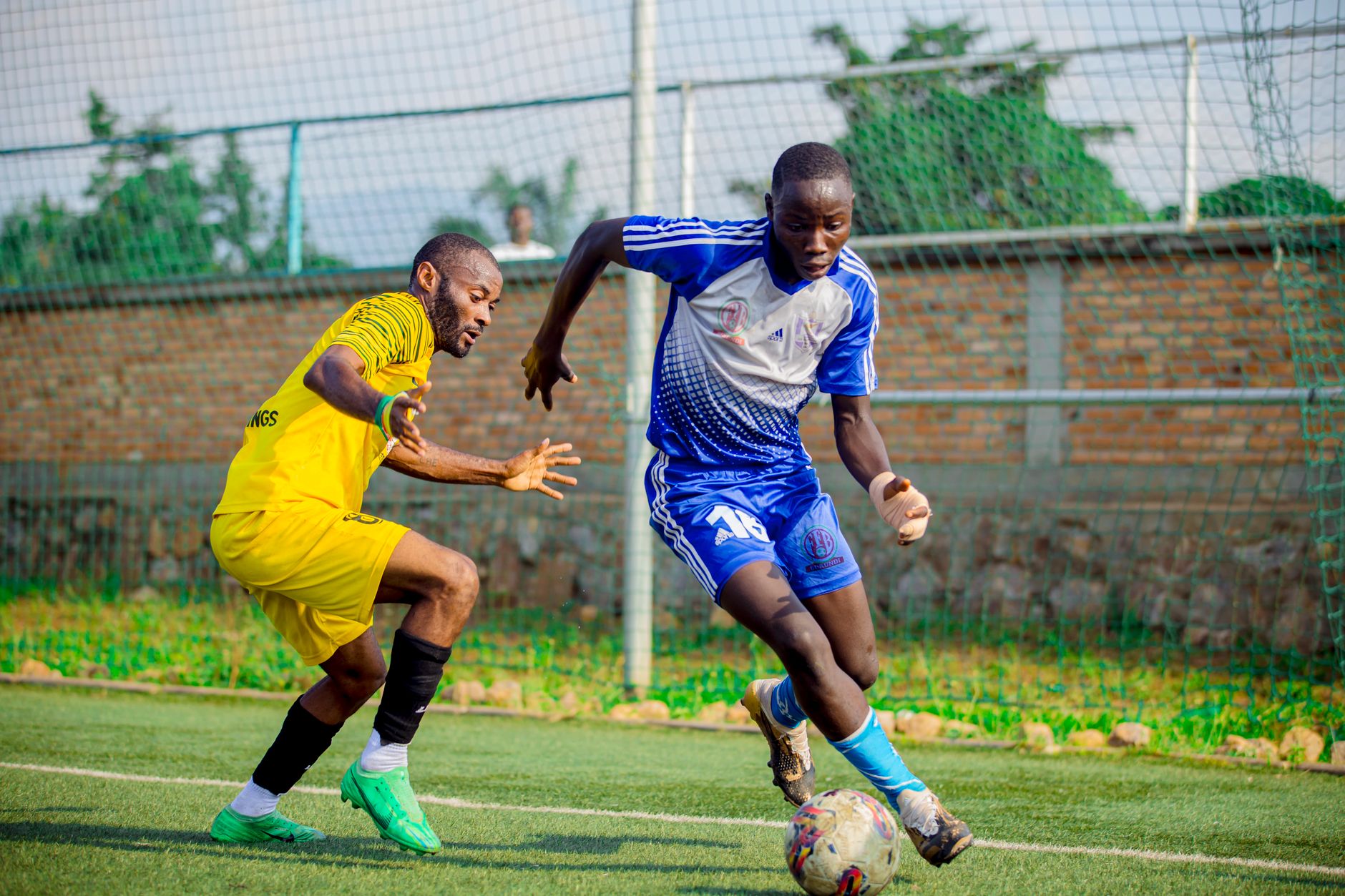
Photo by Chris wade NTEZICIMPA on Pexels
Common mistakes that slow progress
Avoid these errors:
- Increasing speed before controlling the ball.
- Using only the dominant foot.
- Practising without scanning or communication.
- Shooting without recording target zones.
- Repeating drills after technique has visibly broken down.
- Ignoring sleep, hydration, mobility, and recovery.
- Treating every session as a test instead of a learning block.
The World Health Organization notes that physical activity supports health, but football training still needs sensible workload management. Sudden increases in sprinting and shooting volume can irritate the hamstrings, groin, calves, or knees. Increase total high-intensity repetitions by no more than roughly 10–15% per week if you are returning from inactivity, and reduce the load if pain changes your movement.
Track net improvement, not emotional intensity. A difficult session can feel productive while producing fewer quality repetitions than a controlled one. After every practice, score technique, decision-making, and physical freshness from 1 to 5. That simple record helps you identify whether the issue is skill, fatigue, or poor exercise design.
Should you try these football drills today?
You should try these football drills today if you can train safely for 20–30 minutes and choose one measurable weakness. Start with wall passing, irregular dribbling, or weak-foot control, then add pressure after accuracy reaches approximately 80%. The plan works best three or four times per week, with recovery between high-intensity sessions.
Use this four-week progression:
- Week 1: learn movement patterns at controlled speed.
- Week 2: increase repetition quality and use both feet.
- Week 3: add time limits, scanning cues, and passive pressure.
- Week 4: introduce live defenders, scoring systems, and match-like fatigue.
four-week football training plan
Your equipment list is short: one suitable football, 6–12 cones, a wall or rebounder, water, and a notebook or phone timer. If you train alone, film one set from the side and one from behind. Review body position, first-touch direction, head movement, and recovery after errors. Video exposes habits that feel invisible during play.
The biggest improvement usually comes from narrowing the goal. Do not write “become better at football.” Write “complete 40 weak-foot passes in 60 seconds” or “keep 8 of 10 one-on-one possessions.” Goal Moments can complement this work with FIFA World Cup 2026 team tactics, player statistics, and match predictions, giving you examples of how elite players scan, create space, defend, and select risk.
Ready to turn practice into a repeatable routine? Start with one drill, one metric, and one session today.
Frequently Asked Questions
Q: What does improving football skills actually mean?
Improving football skills means becoming more reliable with the ball and making better decisions under match pressure. It includes first touch, passing, dribbling, shooting, defending, movement, scanning, and physical coordination. A useful measurement combines technical accuracy with decision quality, such as completing 40 accurate passes while scanning before receiving. Practising a trick without improving possession, progression, or finishing has limited match value.
Q: How can I improve football skills at home?
You can improve football skills at home with a ball, a safe wall, and a 2-by-2-metre space. Practise inside-foot passes, weak-foot touches, sole rolls, V-cuts, controlled rebounds, and first-touch direction for 20 minutes, three times weekly. Keep the ball within a playable distance and record successful repetitions. Avoid hard shooting indoors because damaged property or unsafe rebounds will interrupt training and create unnecessary risk.
Q: What is the difference between practising alone and training with a partner?
Solo practice develops repetition, coordination, and basic ball mastery, while partner training adds pressure, communication, timing, and unpredictable decisions. A wall can provide useful rebounds, but it cannot fully imitate a defender’s movement or a teammate’s positioning. Use solo drills to build technique, then add a partner or small-sided game at least once weekly. The combination transfers better to competitive football than either method alone.
Q: How often should I practise football skills?
Most recreational and youth players should practise football skills for 20–30 minutes three or four times per week. Place high-intensity sprinting, live one-on-ones, and repeated shooting on separate days when possible. Beginners can start with two sessions weekly and add one session after two weeks without excessive soreness. Stop or reduce intensity when pain changes your running, kicking, landing, or balance.
Q: How long does it take to improve football skills?
Noticeable control improvements can appear within two to four weeks when practice is consistent, while reliable match transfer commonly takes eight to twelve weeks. Your result depends on starting ability, training quality, frequency, sleep, and the amount of pressure included. Test the same metric every seven days, such as shots on target from 20 attempts or accurate passes in 60 seconds. Avoid judging progress from one unusually good or bad session.
Q: Why does my football training work in drills but fail in matches?
Drill performance often fails to transfer because the practice lacks scanning, time pressure, opponents, fatigue, or meaningful choices. Progress from unopposed technique to passive pressure, live pressure, and small-sided games. For example, after completing wall passes accurately, add a shoulder-scan cue and a defender in a passing triangle. If your skill disappears immediately, reduce the pressure slightly rather than returning permanently to easy repetitions.
Q: Do I need expensive equipment to improve football skills?
You do not need expensive equipment; a suitable ball, six cones, a wall, water, and a timer are enough for most foundational drills. A rebounder, goal, or video camera can add feedback but is optional. Cones can be replaced with shoes or safe markers, provided the area is clear. Prioritise a safe surface, appropriate footwear, and measurable practice over premium training technology.
Review your numbers after four weeks, keep the drills that improve match actions, and remove exercises that only create fatigue. Consistency, realism, and honest tracking will improve football skills far more reliably than chasing a heroic session.
For more structured football insight and FIFA World Cup 2026 coverage, explore Goal Moments today.
Goal Moments � Editorial Archive � Volume IV