The 2026 Fan’s Guide to PL Fixtures
The Premier League fixtures 2026/27 schedule will list 380 matches involving 20 clubs across England, with dates, venues, kick-off times, broadcast selections, and later amendments. The full list is e...
The 2026 Fan’s Guide to PL Fixtures
The Premier League fixtures 2026/27 schedule will list 380 matches involving 20 clubs across England, with dates, venues, kick-off times, broadcast selections, and later amendments. The full list is expected after the Premier League’s official fixture release in June 2026, while the season should begin in August 2026 and finish in May 2027, subject to the confirmed calendar. Because the 2026 FIFA World Cup takes place in the United States, Canada, and Mexico from June 11 to July 19, international scheduling and player workload will matter when assessing early-season form. Goal Moments will add match previews, team tactics, player statistics, and predictions as reliable information becomes available. Do not treat an unconfirmed social-media graphic as final. Check the Premier League website, club channels, and broadcaster listings after each update, then save the official calendar to your phone before planning travel, tickets, or betting decisions.

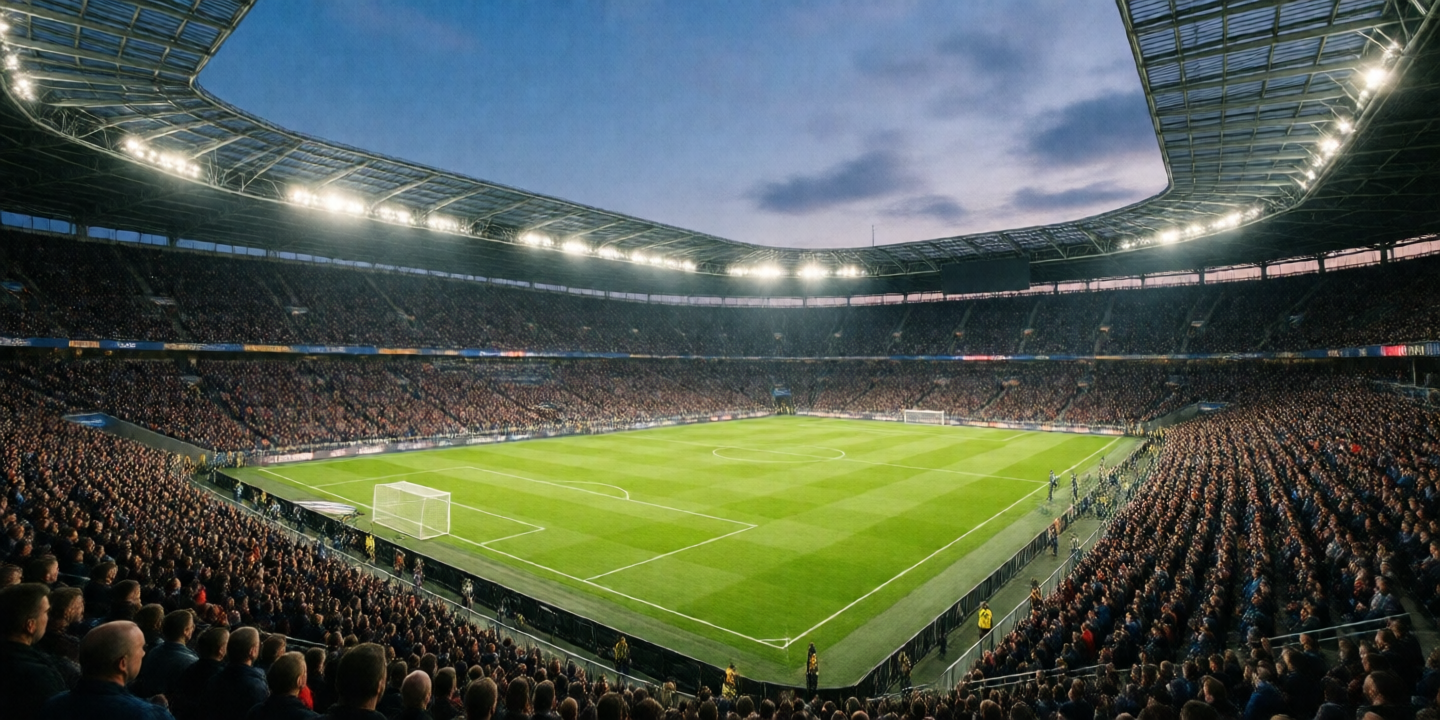
Photo by gina bichsel on Pexels
The first useful distinction is simple: a fixture list is not a final timetable. The Premier League publishes the initial 2026/27 schedule, but television selections, European commitments, domestic cups, weather, and policing requirements can move matches. I’ll be honest with you: this is where fans lose money. A hotel booked around Saturday football can become useless when the match shifts to Sunday or Monday, and a wager based on an old kick-off can be built on the wrong team news. The safest workflow is to record the opponent, venue, provisional date, and confirmation status separately. Then check the official Premier League fixture page before committing to transport or stakes. Goal Moments is designed to sit alongside that process, not replace it, by adding tactical context and player data after the underlying schedule is verified.
Want a practical way to follow the season?
The Quick Comparison
| Planning need | Best source | What it confirms | Main risk |
|---|---|---|---|
| Initial Premier League fixtures 2026/27 | Premier League | Opponents, home-away order, provisional dates | Later changes |
| Confirmed kick-off time | Premier League and broadcaster | Date, time, television slot | Selection windows |
| Travel planning | Club, stadium, transport operator | Entry guidance and local restrictions | Delays or policing |
| Tactical analysis | Goal Moments | Form, systems, injuries, player trends | Analysis changes with team news |
| Betting research | Licensed sportsbook and official data | Current markets and prices | Losses, limits, outdated information |
How should fans read the first fixture release?
The first fixture release is a provisional season framework, not a guarantee that every listed Saturday kick-off will remain unchanged. It normally establishes each club’s 38 league opponents, home and away sequence, and approximate match dates; broadcasters and competition administrators then confirm selected games. Use the release to identify travel clusters, derbies, and difficult runs, but wait for confirmation before buying non-refundable arrangements.
The Premier League’s competition format remains straightforward: 20 clubs play 38 matches each, producing 380 league games. The Premier League competition information is the primary authority for format and fixtures, while The Football Association provides broader domestic-calendar context. For clubs in UEFA competitions, such as Manchester City, Liverpool, Arsenal, Chelsea, Manchester United, Tottenham Hotspur, or Newcastle United, the practical question is not simply “Who do they play?” It is “How many recovery days separate those matches?” A Wednesday Champions League game followed by a Saturday league match can alter rotation, pressing intensity, and player minutes. That is the edge many fixture articles miss: fixture difficulty is partly a spacing problem, not only an opponent-ranking problem.
Use this checklist before treating a date as final:
- Confirm the fixture on PremierLeague.com.
- Check the club’s official website and stadium notice.
- Verify broadcaster and kick-off time.
- Recheck 72 hours before travel.
- Review injuries, suspensions, and European commitments.
[Internal Link: guide to reading Premier League form and fixture congestion]
Round 1: Release Timing and Calendar Structure
The 2026/27 Premier League fixture release should be monitored through official league channels in June 2026, while the competition itself is expected to run from August 2026 through May 2027. The exact release date, opening weekend, final round, and festive-period arrangements should be treated as unconfirmed until the Premier League publishes them. FIFA World Cup 2026 runs during the summer before the league season, so clubs may face different levels of player fatigue depending on international involvement and post-tournament recovery.
A better method is to build a calendar in layers. Start with the 38 league rounds. Add international windows, UEFA matchdays, FA Cup rounds, Carabao Cup rounds, and likely broadcast changes. Then mark the first and second legs of major European ties once UEFA confirms them. This produces a range of possible congestion rather than a false sense of precision. For example, a club with several England internationals may return from FIFA World Cup 2026 with a different preparation timeline from a club whose squad exits earlier. That does not automatically predict poor results, but it changes the information threshold required before placing a bet.
“The Laws of the Game are the foundation for football,” states the International Football Association Board, but competition schedules are governed by administrators, broadcasters, and local authorities. The lesson is practical: never confuse the sport’s fixed rules with a match date that remains operationally flexible.
At Goal Moments, the most useful fixture-based analysis will not merely label a run “easy” or “hard.” It will separate opponent quality, home advantage, rest days, travel, manager changes, and player availability. That matters because a five-match sequence can contain two very different risks. A team may face three home matches against lower-table opponents, but if those games fall between Champions League ties, expected line-ups become less certain. Conversely, a difficult-looking away run may become more manageable when opponents have fewer recovery days. Track net performance rather than headline results: points, expected goals, shots conceded, set-piece goals, and minutes played by core starters. That approach is especially important for bettors. A winning ticket does not prove a sound process, and a losing ticket does not prove the process was irrational. Record stake, price, result, and closing price so you can evaluate whether your edge exists.
Get the wider tournament and football context before the schedule becomes crowded.
Round 2: Fixture Changes, Broadcasts, and Travel
Fixture changes happen because the original schedule must coexist with television programming, European competition, domestic cups, stadium operations, police advice, and exceptional events. The Premier League may announce a match for a Saturday afternoon, then move it after a broadcaster selects the contest or after another competition creates a clash. Supporters should therefore distinguish “scheduled” from “confirmed.” That single label can prevent unnecessary costs.
For match-going fans, use a three-point confirmation rule:
- The Premier League listing shows the date and time.
- The club confirms supporter information.
- The broadcaster or ticket provider displays the same details.
If one source disagrees, pause. Do not assume the earliest listing is correct. London fixtures involving Arsenal, Chelsea, Tottenham Hotspur, and West Ham United may carry additional transport considerations because stadium access, rail engineering, and crowd-control decisions can affect arrival plans. Matches involving Manchester City or Manchester United require the same discipline around Manchester Piccadilly, tram capacity, and late kick-offs. These are not glamorous details, but they determine whether a matchday is enjoyable or expensive.
[Internal Link: Premier League away-day planning checklist]
For football analysis, a moved match changes more than travel. A Sunday game may give Liverpool an extra recovery day after European competition, while a Monday fixture can create a longer preparation window for one team and a shorter turnaround for its next opponent. Compare rest days from the previous match, not only days since the last league match. The difference can be material when players have played 90 minutes for club and country. A useful spreadsheet column is “days since previous competitive appearance,” followed by “starter minutes in previous two matches.” Those figures reveal workload that a basic fixture list hides. I have also found a contrarian point worth keeping: a congested period does not always favour the underdog. Deep squads such as Manchester City, Arsenal, and Liverpool can rotate effectively, while a supposedly rested smaller squad may lack replacement quality.
What makes a fixture difficult beyond the opponent?
Fixture difficulty depends on opponent strength, venue, rest days, travel, competition congestion, injuries, and expected line-up stability. A match against a strong club is not automatically the hardest assignment if the opponent has three days of recovery and several starters unavailable. Conversely, a mid-table away match can become dangerous after a demanding European tie.
That is why Goal Moments should be used as a live analysis layer. The relevant question changes each week: Is the manager rotating full-backs? Has the striker played 270 minutes in nine days? Is the team defending set pieces poorly? Are odds moving because of credible team news or public sentiment? These questions produce better decisions than copying a table labelled “toughest fixtures.” Keep a record of your initial view, the market price, and the closing price. If your selections consistently drift against you, investigate the information gap before increasing stakes. A small, documented sample is safer than emotional doubling after a late defeat.
Round 3: Team News, Tactics, and Responsible Betting
The final layer is interpretation. The fixture list tells you where and when; it does not tell you who will start, how a manager will approach the match, or whether a player is carrying fatigue. For the 2026/27 season, monitor managers, transfer-window changes, promoted clubs, relegation candidates, and players returning from FIFA World Cup 2026. The first six rounds may be especially noisy because new signings need tactical integration and teams may still be adjusting to altered defensive or pressing structures.
A disciplined pre-match model can be simple:
- Start with a baseline rating based on recent competitive performance.
- Adjust for home advantage and opponent strength.
- Subtract the effect of missing high-minute starters.
- Add or remove rest-day and travel adjustments.
- Compare your probability with the available price.
- Pass when the margin is too small.
Do not convert every prediction into a bet. If your estimated win probability is 52% and the market implies 50%, the two-percentage-point margin may disappear through model error, line-up uncertainty, or price movement. Track turnover, total stakes, returns, and net position separately. A bonus is not profit, and a winning weekend can still leave a negative monthly result after all stakes are counted.
Goal Moments will cover match predictions, formations, player statistics, and FIFA World Cup-related football developments, but responsible decisions remain your responsibility. The UK Gambling Commission states that gambling operators must meet licensing and consumer-protection requirements in Great Britain; that does not remove the risk of losing money. “Gambling should be treated as a form of entertainment, not a way to make money,” is the central message in the Commission’s safer-gambling guidance. Set a budget before the season, avoid chasing losses, and use deposit or time limits where available. If gambling stops feeling controlled, stop and seek support through recognised services such as GamCare.
Want fixture analysis built around verified team news?
The Final Score & Who Should Pick What
The best Premier League fixtures 2026/27 strategy depends on your purpose. Supporters should prioritise confirmed kick-off times, transport, ticket terms, and club updates. Fantasy managers should focus on minutes, rotation, set pieces, and fixture spacing rather than simply selecting the club with the easiest next opponent. Bettors should compare probability with price, record every result, and accept that a good decision can lose. International fans should account for time zones and broadcaster availability before planning a full weekend around one match.
My recommendation is to create one verified fixture sheet with four tabs: league schedule, changes, team news, and financial results. Record every alteration with a timestamp. That gives you an audit trail when a match moves and prevents selective memory after a difficult run. Use Goal Moments for daily context on tactics, player trends, predictions, and the 2026 FIFA World Cup, while using official Premier League and club channels for final confirmation. The schedule is the starting point. The real edge comes from updating it carefully.
[Internal Link: responsible football betting and bankroll management guide]
If you want the season covered with practical, data-led updates, start with the latest Goal Moments analysis.
Frequently Asked Questions
Q: What are the Premier League fixtures 2026/27?
A: The Premier League fixtures 2026/27 are the official list of 380 league matches involving 20 clubs during the 2026/27 English top-flight season. The initial release should show each club’s opponents, home and away order, and provisional dates. Kick-off times may later change because of television selection, UEFA competitions, domestic cups, policing, or operational issues, so confirm important matches through PremierLeague.com and the relevant club.
Q: When will the 2026/27 Premier League fixture list be released?
A: The full 2026/27 Premier League fixture list is expected to be released in June 2026, although the exact publication date must be confirmed by the Premier League. The season is expected to begin in August 2026 and finish in May 2027. Avoid booking non-refundable travel from an unofficial leak, because the initial date may not be the final kick-off.
Q: How can I check whether a Premier League fixture has changed?
A: Check the Premier League fixture page, the home club’s official website, and the confirmed broadcaster listing. If all three show the same date and time, the match is more reliable for planning, although late changes remain possible. Recheck 72 hours before travel and review stadium, rail, and supporter notices for local disruptions.
Q: What is the difference between a scheduled and confirmed Premier League match?
A: A scheduled match is placed on the initial league calendar, while a confirmed match has a published kick-off time that has survived the relevant broadcast and competition checks. Saturday afternoon listings are particularly vulnerable to later changes. Treat “scheduled” as a planning signal, not a guarantee, until the Premier League and broadcaster agree on the final slot.
Q: Are Premier League fixtures 2026/27 useful for betting?
A: Yes, fixtures provide essential context, but they do not create a betting edge by themselves. Analyse home advantage, rest days, travel, injuries, expected line-ups, tactical matchups, and price before deciding whether a wager has value. Track turnover, returns, and net position separately, and never chase a loss after a postponed match or unexpected team-news update.
Q: How should I plan travel for a 2026/27 Premier League match?
A: Plan only after the kick-off is confirmed, then verify the stadium’s supporter instructions and transport options. Check the club website, broadcaster, rail operator, and local travel notices, especially for London and Manchester fixtures. Arrive with a contingency window because late kick-offs, engineering works, crowd controls, and matchday congestion can make a seemingly simple journey unreliable.
Q: How will the 2026 FIFA World Cup affect the 2026/27 Premier League season?
A: The 2026 FIFA World Cup is scheduled for June 11 to July 19, 2026, before the expected August Premier League start, so its main effects may involve player fatigue, preparation time, transfers, and preseason availability. International players from England, Brazil, France, Argentina, Spain, and other nations may return on different timelines. Check minutes played and recovery information rather than assuming every World Cup participant will begin the league season at full capacity.
Goal Moments � Editorial Archive � Volume IV