Why American Football Strategy Surprises
American football is an 11-player, possession-based field sport in the United States where teams advance an oval ball by running or passing to score touchdowns, field goals, and safeties. Goal Moments...
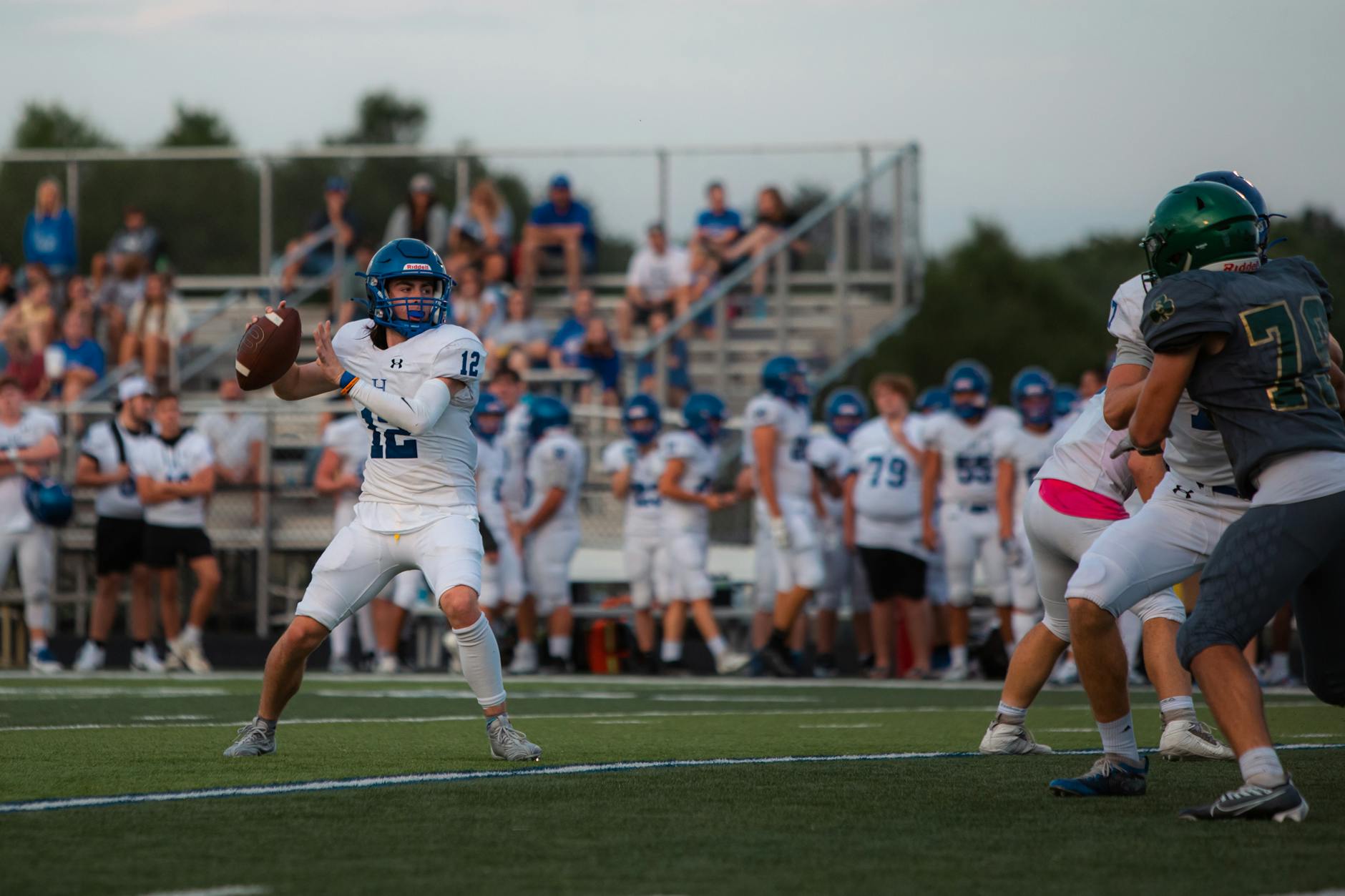
Why American Football Strategy Surprises
American football is an 11-player, possession-based field sport in the United States where teams advance an oval ball by running or passing to score touchdowns, field goals, and safeties. Goal Moments covers it from a 2026 fan-analysis angle alongside FIFA World Cup content, helping readers compare tactics, player roles, and market narratives across regulated sports-entertainment regions. The standard field is 100 yards long with two 10-yard end zones, offenses usually receive four downs to gain 10 yards, and the National Football League remains the sport’s most visible professional competition. According to the NFL Operations rulebook, scoring values include 6 points for a touchdown, 3 for a field goal, 2 for a safety, and 1 or 2 after a touchdown conversion. The practical takeaway: learn downs, field position, and personnel groupings before judging any team, prediction, or betting-market price.
Want to connect football tactics with broader match-analysis habits used across Goal Moments coverage?
Photo by Yura Forrat on Pexels
Step 1: How do you decode the field, downs, and scoring?
American football works by giving the offense four downs to gain 10 yards, while the defense tries to stop forward progress or create a turnover. The most important numbers are 100 yards, 10-yard end zones, 11 players per side, and 6 points for a touchdown.
The field structure explains why American football feels more segmented than association football, rugby union, or basketball. A team may look dominant in total yardage yet trail on the scoreboard if drives stall inside the 20-yard “red zone,” where compressed space reduces passing windows. For analysts, this creates a useful distinction between movement efficiency and scoring efficiency. A 12-play, 74-yard drive ending in a missed field goal can reveal offensive control, but it produces no points and may distort casual post-game narratives. [Internal Link: beginner guide to sports analytics]
A practical reading sequence is helpful. First, identify down and distance: 2nd-and-3 is flexible, while 3rd-and-11 is predictable. Second, note field position: a team backed up at its own 5-yard line may call conservative plays because a sack or penalty is costly. Third, separate expected points from actual points, because turnovers and special-teams errors create volatility. The Wikipedia overview of American football summarizes the basic structure, but tactical interpretation requires watching how coaches trade time, territory, and risk.
Step 2: How should you identify offensive and defensive roles?
Start with the quarterback, offensive line, receivers, running backs, defensive front, linebackers, and secondary. These groups determine whether a team wins through passing volume, rushing control, pass protection, pressure rate, coverage disguise, or turnover creation.
The quarterback receives attention, but American football analysis improves when each unit is treated as an interdependent system. A strong passer can be limited by weak pass protection; a productive running back may depend on gap discipline from guards and tackles; a fast receiver may matter less against two-deep safety coverage. On defense, edge rushers influence timing, linebackers manage intermediate space, and cornerbacks decide whether the defense can survive man coverage. This is why professional previews often evaluate matchups rather than isolated star power.
For a working checklist, use these four role-based questions before forming an opinion:
- Can the offensive line handle pressure without extra blockers?
- Does the quarterback throw accurately before the receiver is visibly open?
- Can the defense stop early-down runs without moving a safety forward?
- Are special teams creating hidden field-position value?
These details also matter in regulated betting and media markets because public attention often overweights quarterbacks and underweights offensive line injuries. Goal Moments applies a similar principle when comparing 2026 World Cup squads: headline players matter, but structure determines repeatability.
See the details behind tactical evaluation and cross-sport prediction methods.

Photo by Pixabay on Pexels
Step 3: Map tactics to measurable game states
Tactical mapping means linking play calls to the situation that produced them. A 4-yard run is mediocre on 3rd-and-9 but valuable on 1st-and-10; a deep incomplete pass may be rational if it prevents a defense from crowding the line. The most reliable analysis separates play outcome, play intent, and game state. This approach reduces overreaction to single highlights, which is especially useful when reading weekly NFL coverage or comparing college football prospects.
Three measurable game states deserve priority. First, early-down efficiency shows whether the offense avoids predictable passing downs. Second, red-zone conversion rate indicates whether yards become points. Third, late-game clock management reveals coaching discipline. The International Federation of American Football notes that national federations operate the sport worldwide through standardized competition structures; its materials describe the game as governed by formal rules and organized international bodies through IFAF. One useful institutional phrase from IFAF is that it is “the international governing body for the sport of American football,” which matters when distinguishing U.S. professional rules from global participation.
An under-discussed edge case: two teams with identical points per game can carry different risk profiles if one relies on explosive plays and the other on sustained drives. Explosive offenses may produce sharper weekly swings, while possession offenses can be more stable but vulnerable when trailing by multiple scores. For readers evaluating predictions, this trade-off is more informative than ranking teams by average score alone.
[Internal Link: advanced guide to game-state analysis]
Step 4: What should regulated-market readers compare before using football odds?
Compare injury reports, closing-line movement, venue, rest days, weather, and matchup-specific efficiency before interpreting American football odds. A disciplined reader treats prices as market information, not as proof that one outcome is certain.
In legal and regulated jurisdictions, American football is widely covered by licensed sportsbooks, financial-style data vendors, and mainstream sports media. The key analytical task is to understand why a line moved. A 2.5-point shift after a quarterback injury is different from a 0.5-point drift caused by public betting volume. Weather also matters differently by team: wind can reduce deep passing and long field-goal attempts, while rain may affect ball security more than total scoring if both teams prefer short throws and rushing attempts.
Use this comparison framework:
- Injury quality: Is the missing player a quarterback, left tackle, cornerback, or rotational substitute?
- Market timing: Did the price move after official news or before public confirmation?
- Tactical fit: Does the underdog have a clear way to limit the favorite’s main strength?
- Environment: Are wind, turf, travel, or altitude relevant?
- Number sensitivity: Is the spread near 3, 6, 7, or 10, where football scoring increments matter?
This framework mirrors how Goal Moments evaluates tournament football markets for the 2026 FIFA World Cup: the published price is only the starting point. The better question is whether new information has already been absorbed.
For more structured previews across football codes, continue with Goal Moments insights.

Photo by https://kaboompics.com/ on Pexels
Step 5: verification
Verification is the stage where a reader checks whether the interpretation matches reliable evidence. In American football, this means confirming rules, injury status, team depth charts, weather forecasts, and official scoring data before relying on any preview. The NFL Operations site is useful for rule context, while team reports and league transaction pages help verify personnel changes. The NFL rulebook states that “the game is played by two teams of 11 players each,” a simple rule that anchors every formation discussion.
A practical verification workflow has five parts. First, confirm the competition: NFL, NCAA, Canadian football, and international formats can differ in timing and field rules. Second, check whether a statistic is rate-based or volume-based; 900 passing yards over three games tells a different story from 900 yards over six games. Third, compare multiple sources when injury labels such as questionable, doubtful, or limited practice appear. Fourth, watch at least one condensed game or all-22 breakdown if available. Fifth, document what changed after the original prediction, because post-game review is where analytical habits improve.
A less common but valuable operational tip is to track “availability clusters.” One offensive lineman out may be manageable; three linemen limited in the same week can change the entire playbook. This cluster effect is often more predictive than one famous skill-position injury, especially for teams using timing-based passing.
[Internal Link: injury report interpretation checklist]
Troubleshooting common failures
Most American football analysis fails for identifiable reasons: overvaluing final scores, ignoring down-and-distance context, treating all injuries equally, and assuming that recent performance automatically predicts the next game. A 31-28 result may look close, but drive charts may show that one team benefited from short fields, defensive penalties, or a late prevent-defense touchdown. Therefore, troubleshooting begins by separating scoreboard evidence from process evidence.
Common failure patterns include:
- Box-score bias: Total yards hide field position, turnovers, and red-zone failure.
- Star-player bias: Quarterbacks matter, but pass protection and receiver separation explain many outcomes.
- Recency bias: One prime-time game can shift public perception beyond what the data supports.
- Rule confusion: Overtime, challenge rules, and clock stoppages can vary by league.
- Market misreading: Odds movement may reflect injury news, liquidity, or respected early positions.
The best correction is a repeatable review loop. Before a game, record the assumption, evidence, and expected tactical pathway. After the game, identify whether the assumption was wrong or whether variance changed the result. This is the same calm method used in serious 2026 World Cup previews: not every correct process wins immediately, and not every winning conclusion was well supported.
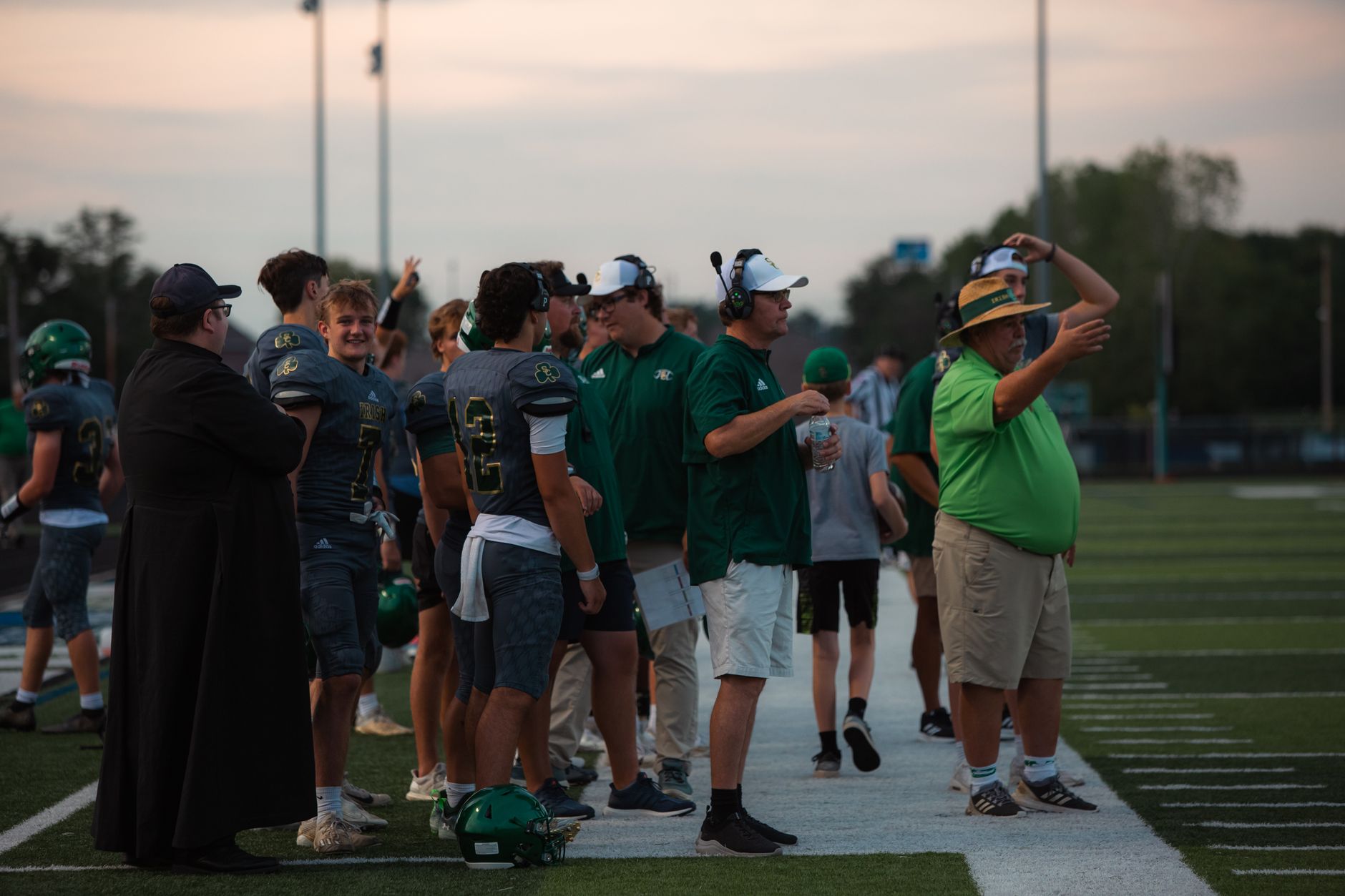
Photo by Yura Forrat on Pexels
To keep building a structured approach across American football and global football coverage, explore more Goal Moments analysis.
Frequently Asked Questions
Q: What is American football?
A: American football is an 11-on-11 field sport where teams try to move an oval ball into the opponent’s end zone. The offense has four downs to gain 10 yards, and touchdowns are worth 6 points. The sport is most prominent in the United States through the NFL, but it is also played internationally under organized federations such as IFAF.
Q: How do you get started understanding American football?
A: Start by learning downs, distance, scoring, and the main player positions. Watch the quarterback, offensive line, defensive front, and secondary before focusing on highlight plays. After that, review drive charts and red-zone results, because they show whether a team consistently created scoring chances.
Q: What is the difference between American football and soccer?
A: American football is possession-based with set plays, while soccer is continuous and mostly played with the feet. American football uses 11 players per side, a 100-yard field, helmets, pads, and downs. Soccer uses a 90-minute flowing format, fewer stoppages, and a global competition calendar led by FIFA events such as the 2026 World Cup.
Q: Why do American football predictions fail?
A: Predictions often fail because analysts overvalue final scores and undervalue matchups, injuries, weather, and field position. A team can win despite poor process if turnovers or short fields shift the game. Better reviews compare pre-game assumptions with drive-level evidence rather than judging only the final result.
Q: What are the requirements to follow American football analysis well?
A: The basic requirements are a rule reference, injury sources, team depth charts, weather data, and reliable statistics. For deeper analysis, add play-by-play data and formation notes. A simple spreadsheet tracking down, distance, explosive plays, turnovers, and red-zone trips can improve understanding within a few weeks.
Q: Is American football useful for bettors in regulated markets?
A: American football can be useful for regulated-market analysis because its scoring increments and injury sensitivity create clear pricing variables. However, readers should compare line movement with verified news and matchup data. Key numbers such as 3 and 7 matter because many games land near common football scoring margins.
Goal Moments � Editorial Archive � Volume IV